
When All is Lost, Walk.
May 24, 2010

A Montana Walkabout - M. Catoggio
I’m so excited! I remember being entranced by novels at the age of 16. I would pick one up on a weekend morning and not close it shut until the sun went down the same day. Sidney Sheldon and Danielle Steel were my favorite authors back then. Good stuff! I don’t believe I’ve read a novel since, mostly because I became fascinated with self-actualization books. What I’ve quickly realized through The Walk is that we also can learn some hearty lessons via a good novel—one that mimics the real life situations many people endure.
Are novels that far-fetched? Some, yes. But all we need to do is turn on the nightly news to experience the realness of our lives. The Walk is exceptional, and that “I can’t put it down” feeling I had as a young reader has returned.
I’ve chosen to read and blog about The Walk: A Novel, by Richard Paul Evans for two reasons. First, because I have been craving the “Calgon—Take Me Away” sensation a good novel gives me, and second, because the description of this one in particular felt appropriate to be reading right now. I believe the author knew what he was doing creating a piece such as this one, right now, when so many people in our country have lost so much of what was a big part of them—a career, a marriage, a home, or as in the case of The Walk, all of the above and then some.
In the first chapter of the book, the main character, Alan Christoffersen, has this to say…
“Life has taught me that to fly, you must first accept the possibility of falling.”
He has fallen hard, and I have to admit that going through the motions with him was not easy. I was holding my breath, clinching my hands, screaming (inside…didn’t want to frighten my little ones!), and crying heavily. Alan definitely takes you for the ride.
In the middle of the book (yes, I’m already almost finished with this one after just one day!) he explains what he’s been through to a stranger he meets in a small town. It’s a great summary of the novel:
“(I had the) Classic riches to rags story. I had the perfect life. And in less than six weeks it was gone. I owned a Seattle advertising agency. Actually, money was only a small part of it. One day my wife was thrown from a horse. She was paralyzed from the chest down. Then a month later, she died from complications. While I was taking care of her, my business partner stole my agency, and my home went into foreclosure. I lost everything. That’s when I decided to walk away.”
He walked all right—3,600 miles to the farthest point from Seattle—Key West.
I guess in a spiritual way I was called to this novel because of the many benefits one can receive from walking. Aside from exercise, walking can be a form of mindful meditation, and for me, it has always been a source of creativity. I can not only come to closure on issues that are “in my way,” but also come up with some great ideas while going for a walk. Or, as I like to say, the answers and ideas come to me.
In the novel, Alan has this to say about his decision to walk…
“In that moment it was clear to me what I had to do…the only thing left for me to do. I needed to walk far away. I believe that in spite of the chains we bind ourselves with, there’s a primordial section of the human psyche that is still nomadic and still yearns to roam free. We see evidence of this in the walkabouts of the Australian aborigines and the Spirit Walk of the native Americans. But it’s not new. Every generation has dreamed of roaming. Deep in our hearts everyone wants to walk free.”
You will find many aha moments while reading The Walk, and there are definitely lessons the author hopes we will learn from his masterpiece. Things like, walking a day in your father’s shoes (Alan’s mother died when he was young and now he understands—a bit—what his father went through); listening to your intuition (his no good, crooked partner); not living beyond your means (the success of his agency enticed them to have it all NOW), and taking the time to smell the roses (would his wife have had the accident if he had taken her up on her invitation to spend the day together instead of rush to work as usual?). And, there are many more lessons we can learn as Alan begins his journey—on foot— to Key West.
One final one that truly made me stop and think, and I’ll close with this, is the transition of death. I see so many individuals struggle and fall into deep darkness at the loss of a loved one. In the book, Alan is definitely in the pit of that darkness. When we lose someone it is hard to find the light in the darkness. For many, they never find that light. Here are a few passages in the book spoken by a small town stranger (to Alan) that helped me feel lighter about death when I walked in Alan’s shoes:
“That’s all death requires of us, to give up living. The thing is, the only real sign of life is growth. And growth requires pain. So to choose life is to accept pain. Some people go to such lengths to avoid pain that they give up on life. The irony is, in the end their escape becomes more painful than what they are avoiding….You know, (Alan) she’s not really gone. She’s still a part of you. What part of you is your choice. She can be a spring of gratitude and joy, or she can be a fountain of bitterness and pain. It is entirely up to you…The greatest secret of life is that we find exactly what we’re looking for. In spite of what happens to us, ultimately we decide whether our lives are good or bad, ugly or beautiful.”
At this point in the story, Alan has only walked for a handful of days. Some may get the feeling that he’s given up, that he is weak for not fighting for his agency, for his home, for his life. But is he weak? There is a powerful Zen quality to this story that I appreciate. Sometimes the transformation we seek is in letting go instead of holding on and fighting. I believe Alan is powerful and courageous, and he is on his way to finding that within him which will lead him home—wherever that may be.
How can you choose happiness in this moment?
What in your life may you be seeing as bad or ugly, which can instead be a source of beauty for you?
Walk on, and have a wonderful week.
Namaste,
Monique
My Relaxed Book Club will discuss selections from books I feel help high-achieving professionals continue to develop themselves and work on their personal leadership leading to more fulfilled, balanced and successful lives and careers.
This Is About Me– My Life!
May 17, 2010

My daughter taking a Strategic Pause
I chose this title for my final post about The Leader in Me, because this statement reflects what the students feel at these various schools where the 7 Habits of Highly Effective People have been implemented (all over the world, I might add!). Regardless of how they went about it, the feedback seems to be same. The students recognize and appreciate that these principles, courses and events are about helping them have amazing lives; about identifying how spectacular and unique they are, and about dreaming and achieving.
I’ve referred mostly to A.B. Combs Elementary, the first school to take on The Leader in Me. Their success was so profound that in 2006 they were named the number one magnet school in the U.S. Amazing. However, they are not the only school to achieve success. The second half of the book details how middle and high schools implement the principles differently than do elementary schools, but have also found significant success. Covey highly suggests that each school doit “Their Own Way.” The important part of implementation is not necessarily how it is done, but how the children and teachers feel. Here is a list of a few other schools highlighted in the book with a snapshot of how they infused the Habits:
- Singapore – Chua Chu Kang Primary School: Habits 1-3 are taught to the 10 year olds; Habits 4-7 are taught to 11 year olds, and all of the Habits are taught to the 12 year olds, who were preparing for their national exam.
- Chicago – Noble Street Charter School in Chicago: The 7 Habits are taught as part of the year-long freshman literature class. Students read the 7 Habits for Teens as well as a series of “personal journey” books that promote taking charge of one’s life and overcoming opposition.
- California – Mar Vista High School: The 7 Habits are taught as part of a stand-alone course called Crossroads. It entails a potpourri of life and career skills and uses the Habits as foundation for the course, which is taught to freshman. They also read the 7 Habits for Teens, and use the matching Student Activity Guide.
- Singapore – Clementi Town Secondary School: Created a program called HEY (Highly Effective Youth) to help first-year students transition from lower level to upper secondary level. They focus on one Habit per week and infuse the Habit into all coursework and via events.
- Guatemala – Across all High Schools: The Minister of Education wanted to address the “hopelessness” that most youth felt in the country. She wanted to teach the kids to dream of a better country and a better life. She created the Path of Dreams program to give youth the tools to learn how to dream again and help them create a Life Plan. Students also are required to develop action plans to help remedy a social problem (in teams), like AIDS, or child abuse.
One common thread across all schools listed in the book is that all teachers are taught the 7 Habits prior to implementation.
In beginning this journey my goal was not to set out to prepare my children to be CEOs, but to be able to lead their own lives; to give them timeless principles that can serve as road maps for them daily. As children, their issues may not seem as complex as ours, but certainly they seem BIG to them. Whether it is sharing a cherished toy (for my 5-year-old), or dealing with peer pressure (for my 11-year-old). I feel confident that 7 Habits will help them make the best choices for them in the moment. And, if they happen not to make the choice I would have liked for them to make, well, it will provide another opportunity for us all to reflect and learn.
The final chapter of the book guides parents, like me, to implement these principles at home. Covey recommends using The Power of Modeling, which includes these important components:
- Inspire Trust: The best way for your children to learn the Habits is to see you modeling them.
- Clarify Purpose: Be clear on what you want your children to learn/accomplish. What is your family’s mission? If you don’t have one, create one. Identify milestones.
- Align Systems: How will you get buy-in? How will you teach the principles (books, activities, etc.). How will your children be held accountable and rewarded?
- Unleash Talent: How will you nurture your children’s gifts. How will your children be involved in planning and goal setting? Will they be empowered or micro-managed?
Finally, Covey suggests incorporating a tradition that A.B. Combs created, called the “strategic pause.” He calls it “recompassing.” I loved this idea and will be teaching it to my children for sure!
It involves having students/your children pause for a few minutes, take a drink of water, stretch their bodies, look toward the light, and think of something hopeful. It is a way of re-energizing and refocusing them.
In closing, I will share a beautiful quote found in the book by Helen Keller, whose own challenges led her to be a mentor to many children:
Have you ever been at sea in a dense fog, when it seemed as if a tangible white darkness shut you in, and the great ship, tense and anxious, groped her way toward the shore…and you waited with beating heart for something to happen? I was like that ship before my education began, only I was without a compass…and had no way of knowing how near the harbour was. ‘Light! give me light!’ was the wordless cry of my soul, and the light of love shone on me in that very hour. – Helen Keller
May all of our children be shown the way, with love, light, and leadership.
Have a great week!
Monique
My Relaxed Book Club will discuss selections from books I feel help high-achieving professionals continue to develop themselves and work on their personal leadership leading to more fulfilled, balanced and successful lives and careers.
The Beauty of Today
May 9, 2010
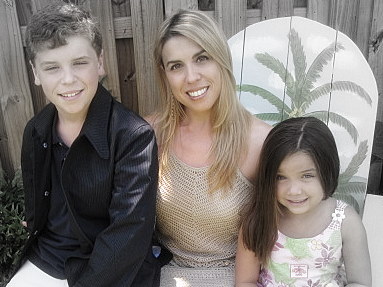
Me and My Babies - Mother's Day 2010
What I love most of my Relaxed Book Club is that it is RELAXED. Today, I thank myself for knowing myself so well. Yes, you may giggle. I am giggling as well as I type these words, because I knew that I needed to make this initiative “relaxed” for those occasions, like today, when I need to step back, breathe, and be only in the NOW.
This week I have chosen not to blog about what I am supposed to. That can wait one more week. Today, I choose to honor myself as a busy woman; a mother on Mother’s Day. It is a sacred day for me. Today, I look more deeply at my children, in awe, and give thanks for the opportunity to be their mother.
Today, also, I wish to share with you a short passage from an article in O’s tenth anniversary issue, written by Eckhart Tolle. I believe we all can benefit from this passage, but today, I dedicate it to all mothers, who sometimes, need to try a bit harder than most to be in the present. Enjoy!
Where to find that goodness…In all the things that we tend to overlook: feeling the gentle breeze on your skin, the sunlight filtering through the clouds, the sound of the rain, the wagging tail of a dog, the shiny apple you are about to bite into. You notice the in-and-out flow of your breath, the feeling of aliveness inside your body. And then there is the beautiful stillness behind it all, which is deep within you. It is through gratitude for the present moment that the spiritual dimension of life opens up.
So, let’s celebrate our anniversaries (I substitute this for “special occasions”) as they arise. What we are really celebrating, though, is the present moment, the doorway into Spirit, and all there ever is.
Enjoy Today. Enjoy Now.
Namaste,
Monique
My Relaxed Book Club will discuss selections from books I feel help high-achieving professionals continue to develop themselves and work on their personal leadership leading to more fulfilled, balanced and successful lives and careers.
Unleashing our Family Culture
May 4, 2010
My review and implementation (at home) of The Leader in Me continues.
by Laughing Squid
Some nice surprises have resulted since beginning our journey to teach our children the 7 Habits of Highly Effective People. Here are a few:
- My son organized his desk (see before photo in my last post) on his own with no pushing! This is a quantum leap! (See After photo below).
- He has begun to accomplish his goal of practicing golf 3-4 times per week.
- In addition to being the “leader of his room”, he, on his own, requested to do additional chores around the house, including walking the dog, helping with laundry, dusting his room, and keeping our windows clean. YAY!!
- My daughter and I sing the kindergarten “Proactive Song” (see my last post), and she just loves it! We’ve invented some other cute songs relating to being proactive as well.
- You’ll often hear her telling all of us spontaneously, “You’re not being proactive!” She gets it.
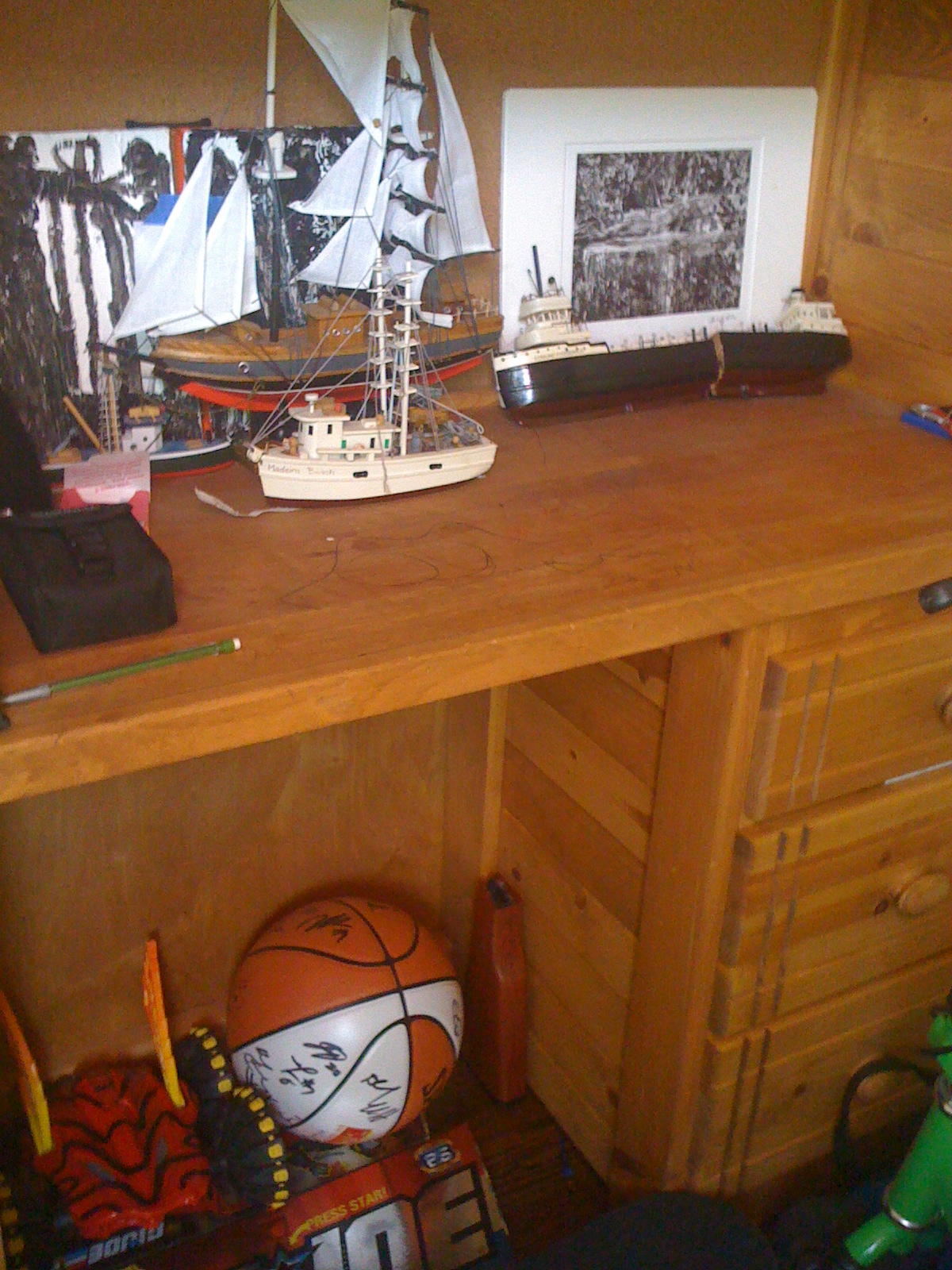
Jake's Desk - After
Gotta love it. The best part is that we haven’t even gotten that deep into the Habits. Up until this point, we’ve only covered Habits 1-4 lightly. However, as the book warns , this process does not happen overnight. In fact, A.B. Combs’ success came about over time. As Stephen Covey tells us,
“A.B. Combs is nearly a decade into the leadership theme, and much of what appears (in these chapters) came about piece by piece, gradually emerging over time.”
It has been interesting, especially, to observe my son over these few weeks. I’m perceiving that he’s feeling a sense of empowerment through the Habits. It seems logical that he would prefer to feel he has the power to choose how to lead (versus being told what to do and why) as well as knowing that we are placing our trust in him to make decisions which are best for him. Either way, he better understands that his actions, regardless, will lead to consequences–positive or negative.
I can see how it would be important to weave the Habits into all that we do so that they simply become a part of us. The children are more inclined to let me speak about the Habits as we are experiencing (in the moment) great ways of using them, as opposed to sitting down and having a “lesson”. The language used by the teachers and students as described in the book suggest how they become second nature to them. They say things like, “(this is) The way we do things around here“; “We dwell in possibilities here“; “You did such a marvelous job with your responsibilities“, etc. When I refer to the Habits and my children give me push back, I simply say, “This is the way we do things around here,” and that’s the end of the conversation. The process is respected. I am also making sure to celebrate their successes.
What’s next? Well, my plans are to continue working in the Habits over time. Because I’ve practiced the Habits myself, I already know that it is important to master the first three, which deal with self-mastery, before moving ahead into the next three, which focus on collaboration. But, mostly, what excites me is the process of unleashing our family’s leadership culture. What A.B. Combs has mastered is to create a unique and deep leadership culture. And, according to The Leader in Me, these are the factors that helped them create this culture:
- Behaviors (i.e., leadership roles, data notebooks, classroom mission statements, etc.)
- Language (i.e., “We focus on the positive”; “We are all leaders”; “We honor the greatness in you”.)
- Artifacts (i.e., murals, posters and artwork expressing the Habits)
- Traditions/Rituals (i.e., Leadership Day, Celebrate Success Hour, service projects, etc.)
- Folklore (stories that have arisen since day 1 of implementation and continue to be shared year after year)
I remember attending a Franklin Covey workshop on the 7 Habits, where everyone in the room represented the business community except for three individuals. When it came time for them to introduce themselves they shared how they were a family (mother and two daughters) who had begun practicing the Habits as a family and recently developed their Family Mission Statement. I was in awe. I remember telling myself,
“Now that is one empowered family! I will do that one day.”
Well, that day has arrived.
If I ask myself what our family culture is, I am not sure I have a clear answer. Using the factors listed above, I plan to move us into the direction of establishing clear examples of how we will bring about this 7 Habits culture in an authentic way; in a way that will make us all proud. After all, wouldn’t it be just as important for families to have a strong, effective culture as it is for companies?
by O ox X
In closing, I’ll share with you A.B. Combs’ Mission and Vision for a bit of inspiration:
MISSION
To Develop Leaders One Child at a Time.
VISION
To Live, to Love, to Learn, to Leave a Legacy.
We Live by striving to be the best we can be.
We Love by caring for others.
We Learn by working hard in the school and always doing our best.
We Leave a Legacy by sharing our school with others and trying to make a difference in the world.
Have a great week,
Monique
My Relaxed Book Club will discuss selections from books I feel help high-achieving professionals continue to develop themselves and work on their personal leadership leading to more fulfilled, balanced and successful lives and careers.


 Illumined Life Leadership