
When All is Lost, Walk.
May 24, 2010

A Montana Walkabout - M. Catoggio
I’m so excited! I remember being entranced by novels at the age of 16. I would pick one up on a weekend morning and not close it shut until the sun went down the same day. Sidney Sheldon and Danielle Steel were my favorite authors back then. Good stuff! I don’t believe I’ve read a novel since, mostly because I became fascinated with self-actualization books. What I’ve quickly realized through The Walk is that we also can learn some hearty lessons via a good novel—one that mimics the real life situations many people endure.
Are novels that far-fetched? Some, yes. But all we need to do is turn on the nightly news to experience the realness of our lives. The Walk is exceptional, and that “I can’t put it down” feeling I had as a young reader has returned.
I’ve chosen to read and blog about The Walk: A Novel, by Richard Paul Evans for two reasons. First, because I have been craving the “Calgon—Take Me Away” sensation a good novel gives me, and second, because the description of this one in particular felt appropriate to be reading right now. I believe the author knew what he was doing creating a piece such as this one, right now, when so many people in our country have lost so much of what was a big part of them—a career, a marriage, a home, or as in the case of The Walk, all of the above and then some.
In the first chapter of the book, the main character, Alan Christoffersen, has this to say…
“Life has taught me that to fly, you must first accept the possibility of falling.”
He has fallen hard, and I have to admit that going through the motions with him was not easy. I was holding my breath, clinching my hands, screaming (inside…didn’t want to frighten my little ones!), and crying heavily. Alan definitely takes you for the ride.
In the middle of the book (yes, I’m already almost finished with this one after just one day!) he explains what he’s been through to a stranger he meets in a small town. It’s a great summary of the novel:
“(I had the) Classic riches to rags story. I had the perfect life. And in less than six weeks it was gone. I owned a Seattle advertising agency. Actually, money was only a small part of it. One day my wife was thrown from a horse. She was paralyzed from the chest down. Then a month later, she died from complications. While I was taking care of her, my business partner stole my agency, and my home went into foreclosure. I lost everything. That’s when I decided to walk away.”
He walked all right—3,600 miles to the farthest point from Seattle—Key West.
I guess in a spiritual way I was called to this novel because of the many benefits one can receive from walking. Aside from exercise, walking can be a form of mindful meditation, and for me, it has always been a source of creativity. I can not only come to closure on issues that are “in my way,” but also come up with some great ideas while going for a walk. Or, as I like to say, the answers and ideas come to me.
In the novel, Alan has this to say about his decision to walk…
“In that moment it was clear to me what I had to do…the only thing left for me to do. I needed to walk far away. I believe that in spite of the chains we bind ourselves with, there’s a primordial section of the human psyche that is still nomadic and still yearns to roam free. We see evidence of this in the walkabouts of the Australian aborigines and the Spirit Walk of the native Americans. But it’s not new. Every generation has dreamed of roaming. Deep in our hearts everyone wants to walk free.”
You will find many aha moments while reading The Walk, and there are definitely lessons the author hopes we will learn from his masterpiece. Things like, walking a day in your father’s shoes (Alan’s mother died when he was young and now he understands—a bit—what his father went through); listening to your intuition (his no good, crooked partner); not living beyond your means (the success of his agency enticed them to have it all NOW), and taking the time to smell the roses (would his wife have had the accident if he had taken her up on her invitation to spend the day together instead of rush to work as usual?). And, there are many more lessons we can learn as Alan begins his journey—on foot— to Key West.
One final one that truly made me stop and think, and I’ll close with this, is the transition of death. I see so many individuals struggle and fall into deep darkness at the loss of a loved one. In the book, Alan is definitely in the pit of that darkness. When we lose someone it is hard to find the light in the darkness. For many, they never find that light. Here are a few passages in the book spoken by a small town stranger (to Alan) that helped me feel lighter about death when I walked in Alan’s shoes:
“That’s all death requires of us, to give up living. The thing is, the only real sign of life is growth. And growth requires pain. So to choose life is to accept pain. Some people go to such lengths to avoid pain that they give up on life. The irony is, in the end their escape becomes more painful than what they are avoiding….You know, (Alan) she’s not really gone. She’s still a part of you. What part of you is your choice. She can be a spring of gratitude and joy, or she can be a fountain of bitterness and pain. It is entirely up to you…The greatest secret of life is that we find exactly what we’re looking for. In spite of what happens to us, ultimately we decide whether our lives are good or bad, ugly or beautiful.”
At this point in the story, Alan has only walked for a handful of days. Some may get the feeling that he’s given up, that he is weak for not fighting for his agency, for his home, for his life. But is he weak? There is a powerful Zen quality to this story that I appreciate. Sometimes the transformation we seek is in letting go instead of holding on and fighting. I believe Alan is powerful and courageous, and he is on his way to finding that within him which will lead him home—wherever that may be.
How can you choose happiness in this moment?
What in your life may you be seeing as bad or ugly, which can instead be a source of beauty for you?
Walk on, and have a wonderful week.
Namaste,
Monique
My Relaxed Book Club will discuss selections from books I feel help high-achieving professionals continue to develop themselves and work on their personal leadership leading to more fulfilled, balanced and successful lives and careers.
This Is About Me– My Life!
May 17, 2010

My daughter taking a Strategic Pause
I chose this title for my final post about The Leader in Me, because this statement reflects what the students feel at these various schools where the 7 Habits of Highly Effective People have been implemented (all over the world, I might add!). Regardless of how they went about it, the feedback seems to be same. The students recognize and appreciate that these principles, courses and events are about helping them have amazing lives; about identifying how spectacular and unique they are, and about dreaming and achieving.
I’ve referred mostly to A.B. Combs Elementary, the first school to take on The Leader in Me. Their success was so profound that in 2006 they were named the number one magnet school in the U.S. Amazing. However, they are not the only school to achieve success. The second half of the book details how middle and high schools implement the principles differently than do elementary schools, but have also found significant success. Covey highly suggests that each school doit “Their Own Way.” The important part of implementation is not necessarily how it is done, but how the children and teachers feel. Here is a list of a few other schools highlighted in the book with a snapshot of how they infused the Habits:
- Singapore – Chua Chu Kang Primary School: Habits 1-3 are taught to the 10 year olds; Habits 4-7 are taught to 11 year olds, and all of the Habits are taught to the 12 year olds, who were preparing for their national exam.
- Chicago – Noble Street Charter School in Chicago: The 7 Habits are taught as part of the year-long freshman literature class. Students read the 7 Habits for Teens as well as a series of “personal journey” books that promote taking charge of one’s life and overcoming opposition.
- California – Mar Vista High School: The 7 Habits are taught as part of a stand-alone course called Crossroads. It entails a potpourri of life and career skills and uses the Habits as foundation for the course, which is taught to freshman. They also read the 7 Habits for Teens, and use the matching Student Activity Guide.
- Singapore – Clementi Town Secondary School: Created a program called HEY (Highly Effective Youth) to help first-year students transition from lower level to upper secondary level. They focus on one Habit per week and infuse the Habit into all coursework and via events.
- Guatemala – Across all High Schools: The Minister of Education wanted to address the “hopelessness” that most youth felt in the country. She wanted to teach the kids to dream of a better country and a better life. She created the Path of Dreams program to give youth the tools to learn how to dream again and help them create a Life Plan. Students also are required to develop action plans to help remedy a social problem (in teams), like AIDS, or child abuse.
One common thread across all schools listed in the book is that all teachers are taught the 7 Habits prior to implementation.
In beginning this journey my goal was not to set out to prepare my children to be CEOs, but to be able to lead their own lives; to give them timeless principles that can serve as road maps for them daily. As children, their issues may not seem as complex as ours, but certainly they seem BIG to them. Whether it is sharing a cherished toy (for my 5-year-old), or dealing with peer pressure (for my 11-year-old). I feel confident that 7 Habits will help them make the best choices for them in the moment. And, if they happen not to make the choice I would have liked for them to make, well, it will provide another opportunity for us all to reflect and learn.
The final chapter of the book guides parents, like me, to implement these principles at home. Covey recommends using The Power of Modeling, which includes these important components:
- Inspire Trust: The best way for your children to learn the Habits is to see you modeling them.
- Clarify Purpose: Be clear on what you want your children to learn/accomplish. What is your family’s mission? If you don’t have one, create one. Identify milestones.
- Align Systems: How will you get buy-in? How will you teach the principles (books, activities, etc.). How will your children be held accountable and rewarded?
- Unleash Talent: How will you nurture your children’s gifts. How will your children be involved in planning and goal setting? Will they be empowered or micro-managed?
Finally, Covey suggests incorporating a tradition that A.B. Combs created, called the “strategic pause.” He calls it “recompassing.” I loved this idea and will be teaching it to my children for sure!
It involves having students/your children pause for a few minutes, take a drink of water, stretch their bodies, look toward the light, and think of something hopeful. It is a way of re-energizing and refocusing them.
In closing, I will share a beautiful quote found in the book by Helen Keller, whose own challenges led her to be a mentor to many children:
Have you ever been at sea in a dense fog, when it seemed as if a tangible white darkness shut you in, and the great ship, tense and anxious, groped her way toward the shore…and you waited with beating heart for something to happen? I was like that ship before my education began, only I was without a compass…and had no way of knowing how near the harbour was. ‘Light! give me light!’ was the wordless cry of my soul, and the light of love shone on me in that very hour. – Helen Keller
May all of our children be shown the way, with love, light, and leadership.
Have a great week!
Monique
My Relaxed Book Club will discuss selections from books I feel help high-achieving professionals continue to develop themselves and work on their personal leadership leading to more fulfilled, balanced and successful lives and careers.
The Beauty of Today
May 9, 2010
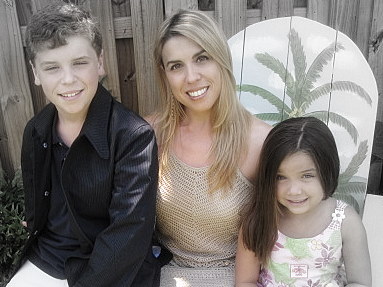
Me and My Babies - Mother's Day 2010
What I love most of my Relaxed Book Club is that it is RELAXED. Today, I thank myself for knowing myself so well. Yes, you may giggle. I am giggling as well as I type these words, because I knew that I needed to make this initiative “relaxed” for those occasions, like today, when I need to step back, breathe, and be only in the NOW.
This week I have chosen not to blog about what I am supposed to. That can wait one more week. Today, I choose to honor myself as a busy woman; a mother on Mother’s Day. It is a sacred day for me. Today, I look more deeply at my children, in awe, and give thanks for the opportunity to be their mother.
Today, also, I wish to share with you a short passage from an article in O’s tenth anniversary issue, written by Eckhart Tolle. I believe we all can benefit from this passage, but today, I dedicate it to all mothers, who sometimes, need to try a bit harder than most to be in the present. Enjoy!
Where to find that goodness…In all the things that we tend to overlook: feeling the gentle breeze on your skin, the sunlight filtering through the clouds, the sound of the rain, the wagging tail of a dog, the shiny apple you are about to bite into. You notice the in-and-out flow of your breath, the feeling of aliveness inside your body. And then there is the beautiful stillness behind it all, which is deep within you. It is through gratitude for the present moment that the spiritual dimension of life opens up.
So, let’s celebrate our anniversaries (I substitute this for “special occasions”) as they arise. What we are really celebrating, though, is the present moment, the doorway into Spirit, and all there ever is.
Enjoy Today. Enjoy Now.
Namaste,
Monique
My Relaxed Book Club will discuss selections from books I feel help high-achieving professionals continue to develop themselves and work on their personal leadership leading to more fulfilled, balanced and successful lives and careers.
Unleashing our Family Culture
May 4, 2010
My review and implementation (at home) of The Leader in Me continues.
by Laughing Squid
Some nice surprises have resulted since beginning our journey to teach our children the 7 Habits of Highly Effective People. Here are a few:
- My son organized his desk (see before photo in my last post) on his own with no pushing! This is a quantum leap! (See After photo below).
- He has begun to accomplish his goal of practicing golf 3-4 times per week.
- In addition to being the “leader of his room”, he, on his own, requested to do additional chores around the house, including walking the dog, helping with laundry, dusting his room, and keeping our windows clean. YAY!!
- My daughter and I sing the kindergarten “Proactive Song” (see my last post), and she just loves it! We’ve invented some other cute songs relating to being proactive as well.
- You’ll often hear her telling all of us spontaneously, “You’re not being proactive!” She gets it.
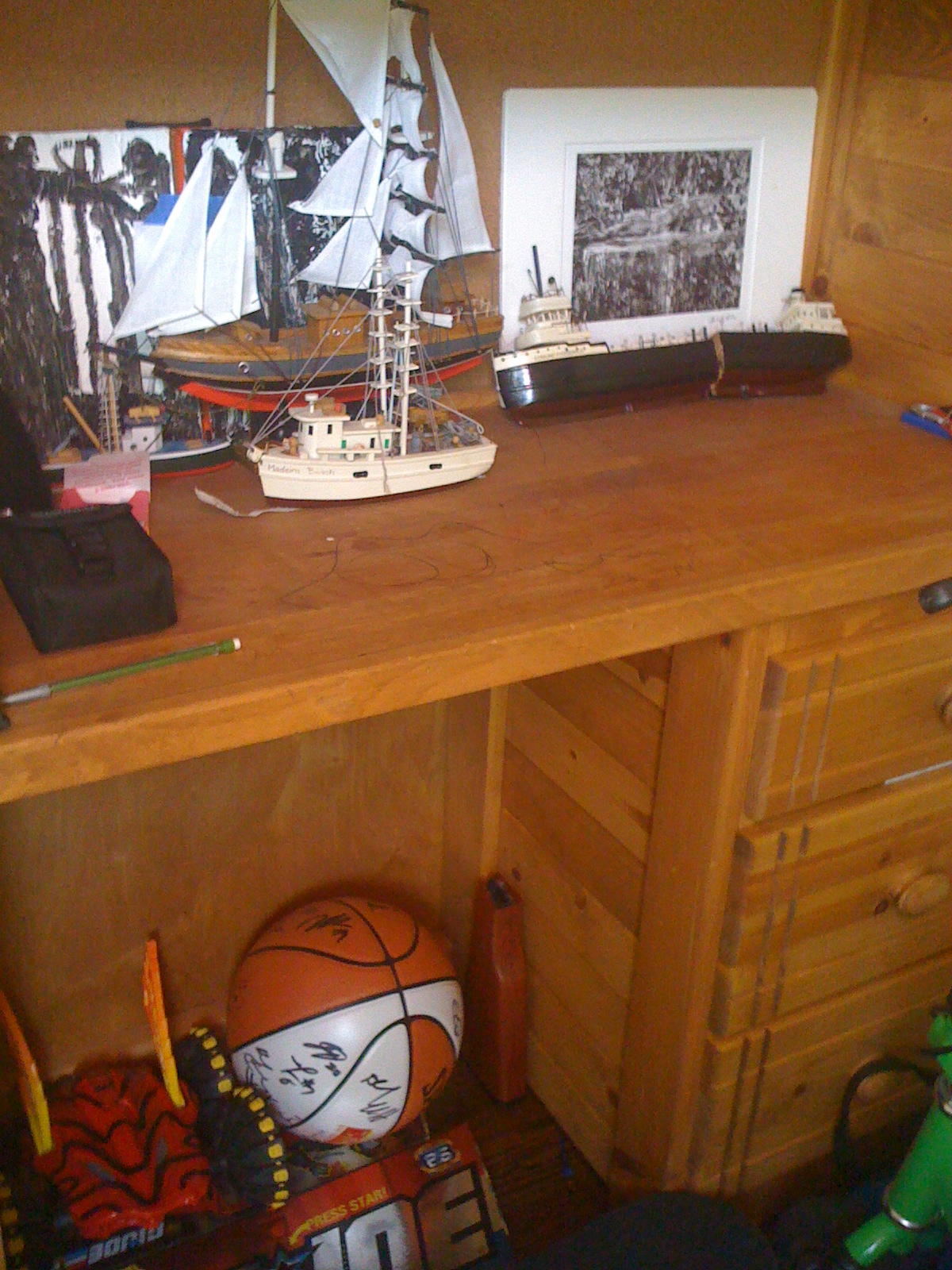
Jake's Desk - After
Gotta love it. The best part is that we haven’t even gotten that deep into the Habits. Up until this point, we’ve only covered Habits 1-4 lightly. However, as the book warns , this process does not happen overnight. In fact, A.B. Combs’ success came about over time. As Stephen Covey tells us,
“A.B. Combs is nearly a decade into the leadership theme, and much of what appears (in these chapters) came about piece by piece, gradually emerging over time.”
It has been interesting, especially, to observe my son over these few weeks. I’m perceiving that he’s feeling a sense of empowerment through the Habits. It seems logical that he would prefer to feel he has the power to choose how to lead (versus being told what to do and why) as well as knowing that we are placing our trust in him to make decisions which are best for him. Either way, he better understands that his actions, regardless, will lead to consequences–positive or negative.
I can see how it would be important to weave the Habits into all that we do so that they simply become a part of us. The children are more inclined to let me speak about the Habits as we are experiencing (in the moment) great ways of using them, as opposed to sitting down and having a “lesson”. The language used by the teachers and students as described in the book suggest how they become second nature to them. They say things like, “(this is) The way we do things around here“; “We dwell in possibilities here“; “You did such a marvelous job with your responsibilities“, etc. When I refer to the Habits and my children give me push back, I simply say, “This is the way we do things around here,” and that’s the end of the conversation. The process is respected. I am also making sure to celebrate their successes.
What’s next? Well, my plans are to continue working in the Habits over time. Because I’ve practiced the Habits myself, I already know that it is important to master the first three, which deal with self-mastery, before moving ahead into the next three, which focus on collaboration. But, mostly, what excites me is the process of unleashing our family’s leadership culture. What A.B. Combs has mastered is to create a unique and deep leadership culture. And, according to The Leader in Me, these are the factors that helped them create this culture:
- Behaviors (i.e., leadership roles, data notebooks, classroom mission statements, etc.)
- Language (i.e., “We focus on the positive”; “We are all leaders”; “We honor the greatness in you”.)
- Artifacts (i.e., murals, posters and artwork expressing the Habits)
- Traditions/Rituals (i.e., Leadership Day, Celebrate Success Hour, service projects, etc.)
- Folklore (stories that have arisen since day 1 of implementation and continue to be shared year after year)
I remember attending a Franklin Covey workshop on the 7 Habits, where everyone in the room represented the business community except for three individuals. When it came time for them to introduce themselves they shared how they were a family (mother and two daughters) who had begun practicing the Habits as a family and recently developed their Family Mission Statement. I was in awe. I remember telling myself,
“Now that is one empowered family! I will do that one day.”
Well, that day has arrived.
If I ask myself what our family culture is, I am not sure I have a clear answer. Using the factors listed above, I plan to move us into the direction of establishing clear examples of how we will bring about this 7 Habits culture in an authentic way; in a way that will make us all proud. After all, wouldn’t it be just as important for families to have a strong, effective culture as it is for companies?
by O ox X
In closing, I’ll share with you A.B. Combs’ Mission and Vision for a bit of inspiration:
MISSION
To Develop Leaders One Child at a Time.
VISION
To Live, to Love, to Learn, to Leave a Legacy.
We Live by striving to be the best we can be.
We Love by caring for others.
We Learn by working hard in the school and always doing our best.
We Leave a Legacy by sharing our school with others and trying to make a difference in the world.
Have a great week,
Monique
My Relaxed Book Club will discuss selections from books I feel help high-achieving professionals continue to develop themselves and work on their personal leadership leading to more fulfilled, balanced and successful lives and careers.
But, I am proactive, Mom!
April 24, 2010
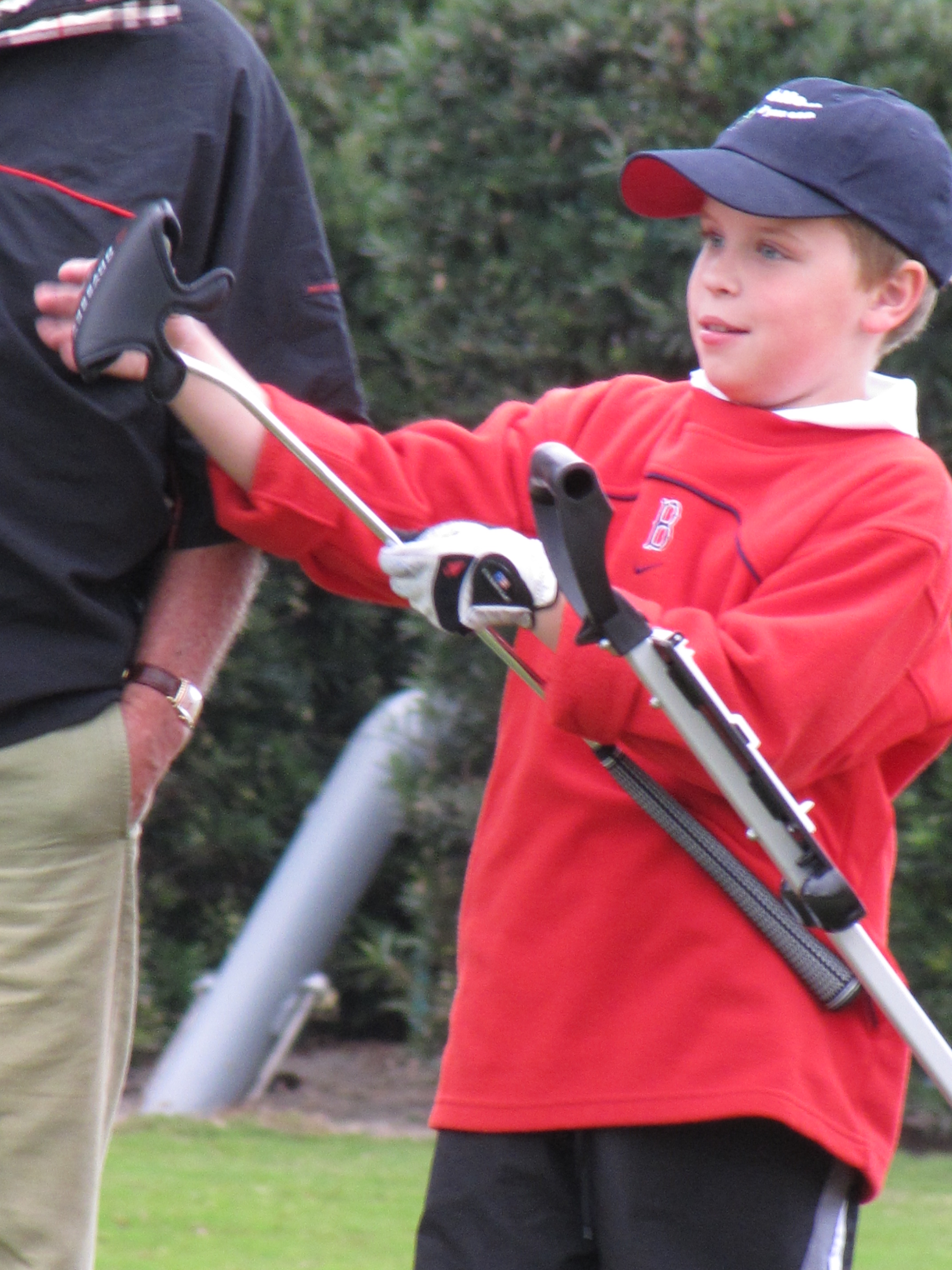
My Lil' Golfer
My review and implementation (at home) of The Leader in Me continues.
He stumped me! Yes, my son, Jacob. During our first 7 Habits discussion at I-Hop (I figured it would be easier over chocolate chip pancakes!), Jacob claimed he was already perfectly proactive. Part of me (the proud Mom) said, “You go, boy! Be proud of all you do!” And another part of me said, “You must be kidding me! Look at your room!!!” So, strategically, I decided I would keep the conversation very positive, focus on what is working well, and get him to Begin with the End in Mind first (Habit 2). I asked him, “What’s one thing you would absolutely love to achieve this year?” He answered, “Mom, I want to win first place in a golf competition.” Great! We have our first goal. My second question (back to Habit 1: Be Proactive) to him was, “What do you feel you need to do to achieve this goal?” He quickly answered, “Practice more.” Bingo.
In The Leader in Me, A.B. Combs uses a few techniques to keep the Habits ever-present for the children. First, all the children have a leadership role (mail carrier, greeter, safety patrol, critter keeper, etc.), and second, they keep a Data Notebook (3-ring binder) to track their goals and successes and share with students, teachers and parents. Although I am not adopting all of the exact strategies used in the book, I am using the same concepts. Both Nia and Jake picked their first Leadership Roles for home. Of course, I have plenty of roles I could assign to them, but that would defeat the purpose. I let them choose their roles, and I am committed to helping them feel successful and track their successes within their chosen roles.
Nia wants to be the leader of her new tortoise, Coney. So, daily, we’ll coach her on what it means to be a leader for her pet. Jake decided he wants to be the leader of his room. Secretly, I think this means he wants to keep his little sister out of his room (LOL!), but we also will coach him around the power around this role. In fact, I had him observe one area of his room (that drives me crazy…see photo below), and I asked him, “What purpose does this area of your room hold for you?” His smart alec answer… “It holds my stuff.” Yeah…that’s obvious! So, I countered that answer by asking, “Okay, how could it better hold your stuff?” He responds, “Mom, this area of my room doesn’t bother me!” Gosh, he stumped me again! But, I didn’t let him win. Once again I focused on Habit 2 (this one seems to work well for Jake) by asking, “What do you think about making this your Golf Goal Space?” His eyes opened wide and he enthusiastically said, “Yes, Mom, I can already see it!” Okay….I pat myself on the back.
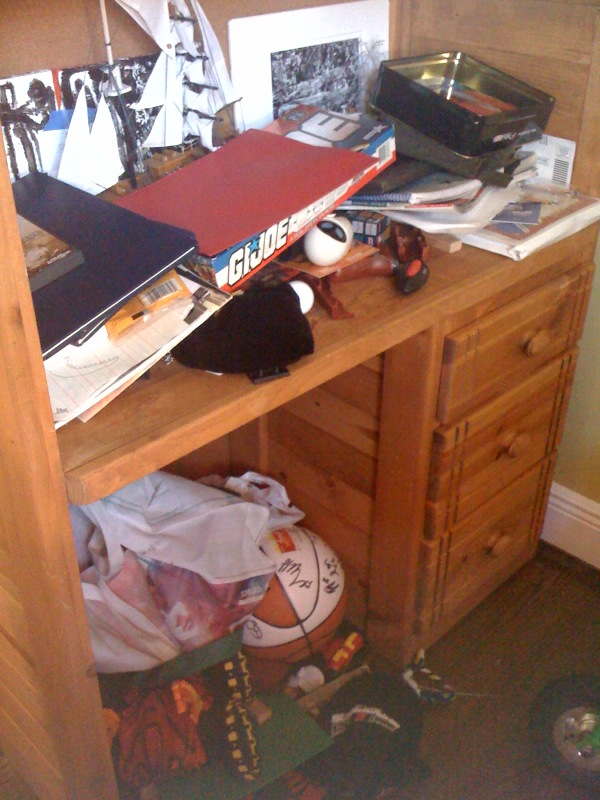
Yikes! Help me!
Instead of Data Books, we liked the idea of having a cork board for each of them in their rooms, where they could read the Habits daily, we (parents) could re-direct them to the Habits as necessary, and they also could post a photo reflecting one or more of their goals as if achieved. So, while Jacob wants to win a competition, Nia decided she wanted a dolphin on her board to reminder her of wanting to scuba dive (like father like daughter!). We’ll be working on those boards over the next week as well as getting Jake’s Golf Goal Space off to a good start.
Nia and I also read a beautiful new book, which nicely reflects Habits 1 and 2 as well as the 8th Habit, which is all about finding your voice and inspiring others to find theirs. The book, titled The Curious Garden, is a simple and beautiful story about a little boy who lives in a big, cold city with lots of big buildings. He finds some weeds growing up through an old, long train track, and decides he will help the plants flourish. Soon, the entire track is filled with beautiful gardens. His work later inspired others in the city to grow gardens, changing the energy of the city altogether. When I asked Nia how the boy was proactive, she said to me “Mom, he helped the garden grow and then other people grew gardens too!” I actually couldn’t believe she got it! I guess you CAN teach a 5-year-old how to be proactive! She loves the new word and is beginning to use it often. Bingo. Next week we will tackle Habits 3 and 4… Put First Things First, and Think Win-Win, while continuing to strengthen the first two.
So, Week 1 of infusing the 7 Habits into our world is feeling positive. In The Leader in Me it is clear that one of the reasons A.B. Combs was so successful is because the teaching of the Habits was ubiquitous. They didn’t teach one habit per month (referred to as character education) or just pick a few activities to initiate during the year. No. The Habits are built into EVERYTHING the school does. It has become the foundation for the school’s culture.
In closing, I’ll leave you with a simple song developed by an A.B. Combs kindergarten teacher to help her students remember Habit 1 (to the tune of Twinkle Twinkle, Little Star):
Be Proactive Every Day,
Be Proactive, Stop and Think.
Even Though it’s hard to do,
I think you should try it too.
Be Proactive Every Day,
Be Proactive, Stop and Think.
My Relaxed Book Club will discuss selections from books I feel help high-achieving professionals continue to develop themselves and work on their personal leadership leading to more fulfilled, balanced and successful lives and careers.
Teaching Timeless Principles to our Children
April 18, 2010
by Jay Morrison
We can all thank Muriel Thomas Summers, the principal of A.B. Combs Elementary in Raleigh, North Carolina, for being the first person to take the timeless 7 Habits of Highly Effective People and develop a formal process for teaching them to the students and teachers at A.B. Combs, beginning with students, age 5.
She comments about a session with Stephen Covey she attended as a student of leadership:
“Everyone was hanging on to every word being said. I believe they were sensing the very same thing that I was sensing, that what Dr. Covey was sharing was a set of timeless, universal principles.” She continued, “I found myself listening with the head of an administrator and the heart of a parent. And the more I listened, and the more I looked into the eyes of the people around me, the more I kept thinking, ‘Muriel, if you could teach this to young children, they would not have to wait until they were adults to learn these principles. If they looked through that lens for the rest of their lives, how different not only their lives might be, but how different our world might be.’ “
I couldn’t agree more with Muriel. What’s interesting about what happened next is that the parents and community members surrounding the school, when surveyed, didn’t even mention improving the academics of the school (failing at the time!) as something that critically needed to change. What they wanted to experience was a group of students who were responsible, caring, creative, compassionate, and who respected diversity and knew how to do the right thing when faced with a difficult decision. Wow!
A.B. Combs, which was about to close its doors, was transformed into a Leadership Magnet Elementary School, and the results were astounding. In fact, what all schools that implemented The Leader in Me program (reported in near unison) experienced within the first year included:
- Improved student achievement
- Significantly enhanced self-confidence and esteem in students
- Dramatic increases in teachers’ and administrators’ job satisfaction and commitment
- Greatly improved school cultures
- Parents who are delighted and engaged in the process, and
- Business and community leaders who want to lend support.
In fact, A.B. Combs’ enrollment doubled and now has a waiting list!
In the book it is clear, and recommended, that parents implement these same principles in the home. As I mentioned in my last post, that’s what I’m now embarking on. Anyone joining me out there? 🙂
So, my first assignment is to ensure that the 7 Habits are visible in our home so we can easily refer to them. For those of you who have not had the awesome opportunity of reading the 7 Habits of Highly Effective People, or taken a course, here they are:
1. Habit 1: Be Proactive
2. Habit 2: Begin with the end in mind
3. Habit 2: Put first things first
4. Habit 4: Think win-win
5. Habit 5: Seek first to understand, then to be understood
6. Habit 6: Synergize
7. Habit 7: Sharpen the saw
I’m not going to go over them in great detail at this time, but I will as we move ahead in blogging about this book and our activities at home. This week coming up, my plans are to do the following:
- Have the kids help me to create some visual representation of the Habits throughout our home
- Discuss the very basic concepts of each Habit
- Brainstorm about ways each of us can make small steps to improve upon the first two Habits
- Read books (age appropriate) that express the proper use of the principles (as recommended in the Parent’s Guide)
In thinking how this may work for us, I’m going to ask the kids to journal (I will help Nia with hers, since she is only 5!) about how they feel they are doing and what positive changes they are experiencing through using the Habits. My intentions, truly, are to have simple discussions, short weekly activities, and refer back to the principles as needed during our daily doings to reinforce their positive use. After all, we are very busy professionals and parents, and I want to ensure my children are able to grasp these concepts and make them theirs. At the same time, this is an opportunity for my husband and I to also reinforce these principles for our own good. I’m looking forward to taking action.
I hope you will join me for a nice discussion next week, as I hope to have some juicy nuggets of what’s working and what needs to work better!
On the leadership trail…
Monique
My Relaxed Book Club will discuss selections from books I feel help high-achieving professionals continue to develop themselves and work on their personal leadership leading to more fulfilled, balanced and successful lives and careers.
No More Mommy Guilt!
April 5, 2010
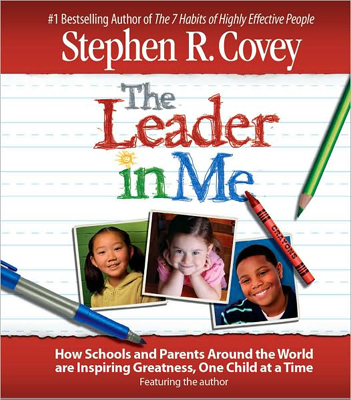
There has been a theme to my life this past month, and although I was enthralled by Seth Godin’s Linchpin, which really makes us think about being indispensable in our work lives, in the back of my mind I couldn’t stop thinking about being indispensable for my children. And, it’s not so much that I want them to see me as something they can’t live without (yes, I’ll take that too!) as much as I want to believe…know in my gut…that I’ve done what is within my power to help them develop as Linchpins themselves.
I was invited in March to attend an event where Stephen Covey was speaking about how the 7 Habits are now being taught to children as young as 5 years old in schools across the U.S.. I was not able to make the engagement, but coincidentally, I received an invitation to a webinar about this new movement and the book that describes it– The Leader in Me. Well, I was positively floored with what I heard and saw. And, happy that so many schools are now making it a priority to teach children how to take personal responsibility for their thoughts, actions, feelings, and see themselves as leaders beginning at a young age. Mostly, though, I became motivated to begin this process at home with my children.
My family and close friends know that I have a sign in my bedroom that reads “No More Mommy Guilt!” Mommies out there…you know what I mean! I’ve been able to wipe away the good majority of this guilt from my life, but it does creep in during stressful times. So I decided to take action after I received this email that sounded too close to home this month:
From Raising Small Souls:
If a recording were to be made of the interaction between a parent and her child on a typical day, studies show that it would sound something like this:“Take your shoes off the couch.”
“Get your shoes on already.”
“Hurry up!”
“Don’t yell.”
“We’re late, hurry!”
“Food belongs in the kitchen.”
“Oh! Look at the mess you made!”
“What do you mean, you can’t find your shoes?”
“Did you brush your teeth?”
“Where was the other shoe?”
“Finish up, we’ve gotta go!”
“I SAID DON’T YELL!”
etc.
How do we stop this tape from continuously running in our homes? I now have a thesis I hope to prove that implementing the 7 Habits at home will dramatically help us all to shift out of this type of one-way chatter and into a self-led proactive communication and action model. Cross your fingers (along with me!). I’m going for it.
So, for you Mommies (and Daddies!) who want to join me in implementing the 7 Habits at home, this is my Relaxed Book Club topic of the month (maybe not so relaxed this time!).
You can find The Leader in Me in book stores, and you can download the Parent’s Guide for less than $5.
Here’s to creating the most adorable bunch of Linchpins at home!
I hope you will become inspired as well and join me!
In the spirit of leadership,
Monique… the “no more mommy guilt” Mommy!
My Relaxed Book Club will discuss selections from books I feel help high-achieving professionals continue to develop themselves and work on their personal leadership leading to more fulfilled, balanced and successful lives and careers.
What’s dying to be born?
March 30, 2010


by cruel shoes
“I didn’t set out to get you to quit your job or to persuade you to become an entrepreneur or merely to change the entire world. All I wanted to do in this book was to sell you on being the artist you already are. To make a difference. To stand for something. To get the respect and security you deserve.”
It is clear to me that Godin’s goal in writing this book (Linchpin) is simple: Know your power. Live your art. Have no regrets. If you do these three things, you may very well achieve the fulfillment in life you’ve always desired; enjoy your career and hobbies, and be surrounded by individuals who truly see you, appreciate you, and want you to thrive. In fact, they won’t be able to live without you.
You can’t live this kind of life if you let your lizard brain dominate. No. Surrender the cog tendencies of conformity, obedience, and compliance. Instead, you should embody passion, compassion, dignity, humanity, and generosity. Know your gifts and be generous with them. Connect with others in meaningful ways with your gifts. This cycle of gift giving should never end. Be indispensable.
Because so many of us at times feel stuck in our careers, however, I feel it is important to share Godin’s perspective of thinking– “My boss won’t let me.” Gosh, I’ve been there (just like you!), but how’s this for an “aha” moment:
“You think your boss won’t let you (be an “artist”), at the very same moment that your boss can’t understand why you won’t contribute more insight or enthusiasm. In most non-cog jobs, the boss’s biggest lament is that her people won’t step up and bring their authentic selves to work.”
Does this change your mind at all? See…it all truly lies within. Don’t give your power away, embrace it and decide to be a Linchpin. As we’ve discussed in earlier blogs this month, being a Linchpin is a CHOICE.
How can you be more authentic and bring more insight and enthusiasm to your job? Imagine that you are doing so in this moment and see how energized you feel.
If you are still a bit stuck with finding your “art,” ponder upon this question I came across on one of my favorite blogger’s (D. LaPorte) posting’s– “What’s dying to be born?” I just adore this question, and have written it on my work board so that I can ask it of myself over and over, so that I don’t stop creating my art.
And, now, I ask you… “What’s dying to be born?”
Wouldn’t it be great if your co-workers and your boss begin to ask you, “Who are you, and where have you been hiding?” Nice.
Know your power. Live your art. Have no regrets. Go do it.
I will leave you with some food for thought Godin shares at the end of the book (And, Seth, thanks for the gift of your book!):
Everybody has their own private Mount Everest they were put on this earth to climb.
Sing in your own voice.
Do the work. Please.
Don’t worry about finding inspiration, it comes eventually.
You are responsible for your own experience.
Ignore everybody.
Avoid the water cooler gang.
The hardest part of being creative is getting used to it.
Dying young is overrated.
………………………………………
Live young at HeART, and prosper!
Namaste,
Monique
My Relaxed Book Club will discuss selections from books I feel help high-achieving professionals continue to develop themselves and work on their personal leadership leading to more fulfilled, balanced and successful lives and careers.
Shippin’ off to Success
March 21, 2010
 In Linchpin, Godin refers to “Ship” or “Shipping” as the action we take when we embrace our art energetically and “sprint,” or focus all of our effort on the art until we achieve our intended goal.
How do we know when it’s time to ship? First, we need to ensure that we’ve silenced the resistance (or lizard brain) and selected the right art to ship. Let’s stop here. Are you asking yourself, “What do you mean the ‘right art’? We have more than one?” Absolutely. Take Godin’s example, here:
“Van Gogh wasn’t wired to paint. Paint was the medium available to him at the time. If he had lived today, perhaps he would have marketed organic tofu. It’s not predetermined that you’ll hold a paintbrush or write a symphony. That means you have to choose your art. It’s not preordained; there isn’t only one art for you…If you pick something that’s beneath you, then the resistance will win. Trivial art isn’t worth the trouble it takes to produce it…If it’s not, dream bigger.”
Remember that our lizard brain wants to distract us. It wants us to be workaholics who fill our hours with meaningless, busy work. When the lizard brain is at hand we choose bad ideas or trivial art, and either our feelings of anxiety or insignificance get the best of us.
Godin uses his own personal examples to show us how to SHIP. He shares,
“Am I some sort of prodigy? I don’t think so. I ship. I don’t get in the way of the muse, I fight the resistance, and I ship. I do this by not doing an enormous number of tasks that are perfect stalling devices, ideal ways of introducing the resistance into our lives.”
Here’s an easy-to-follow synopsis of his process for Shipping with a solid platform (with a nautical theme for fun!):
1. Choose your Destination (or art: project, idea, event, etc.). Make sure it is not trivial, but energizes you, inspires you, and brings out the artist in you.
a. Can’t find that inspiration? Give yourself 30 minutes to come up with 10 ideas! This type of brainstorming session quiets the lizard and enables us to sprint for a short period and connect with inspiration. I tried this yesterday. I focused on one topic—coaching, and within 10 SECONDS I came up with a great idea that I plan to put through this process.
2. Select your Ship Date and post it up on a wall where you see it daily. This is your non-negotiable launch date.
3. Go Fish. Fishing will definitely be a part of your journey. Use your preferred method to capture all of your ideas (index cards, journal, word doc, etc.)
4. Create Motion in the Ocean. Review what you’ve captured, and capture more (when you think you’ve brainstormed enough…do more of it!)
5. Map your Trip. What are the coordinates that will get you to your destination? This is when you take what you’ve captured and create your map (timeline, resources, business plan, etc.).
6. Round up your Crew. A ship does not endure with just its captain. It needs a solid crew. Gather those who can approve, cancel, suggest, own (investors) and who care about your Destination. Review your map with them. Make any changes to your plans based on their feedback.
7. Ship. Here’s the key, though. Only ship when you get the “YES” from your crew. Are they in or out? They are your platform and you need them in order to reach your destination.
So now that you’ve shipped, how do ensure you succeed? Godin offers the regimen of Leo Babauta, author of Zen Habits, which looks like this:
1. Attempt only one significant work a year.
2. Break it into smaller projects.
3. Find three tasks to accomplish each day that get you closer to completion.
4. Do these in less than one hour each day (focused work, or “sprinting”).
Today, take some time to ponder what your days are filled with. Are you being an artist today (or tomorrow, or the next day)? If your days happened to be filled with meaningless “cog” work, and you find yourself just “looking busy,” consider shaking things up. The lizard is definitely at play and is happy you are not tapping into your inner artist.
Do yourself a favor. Locate your destination. Chart your course. Be your own captain. Do it today.
Namaste,
Monique
My Relaxed Book Club will discuss selections from books I feel help high-achieving professionals continue to develop themselves and work on their personal leadership leading to more fulfilled, balanced and successful lives and careers.
Are you there, God? It’s me, Sybil.
March 14, 2010
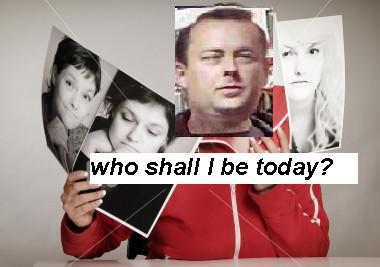 As a child I remember watching the movie, Sybil. My heart hurt for her and everything she endured because of her illness. While watching, I remember wondering, “Who is the real Sybil.” I wanted her to experience that desperately as well.
You and I may not be Sybil and experience multiple personalities, but don’t you sometimes feel like there is more than one of you? Don’t you catch yourself looking up to the sky sometimes and asking for help? You may find yourself saying, “Who the hell am I?” “Why does one voice tell me go and the other stop?” “Why am I happy today and pissed tomorrow?” Yes…we’ve all been there.
Well, if you read my last blog about Linchpin: Are You Indispensable?, you know that you kinda do have two of you in there somewhere. In fact, according to Godin,
“There are two almond-shaped bits in everyone’s brain. Scientists call these amygdale, and this mini-brain apparently takes over whenever you are angry, afraid, aroused, hungry, or in search of revenge. It’s only recently that our brains evolved to allow big thoughts, generosity, speech, consciousness, and yes, art…The new part is the neocortex…In the face of screaming resistance from the amygdale, the rest of the brain is helpless. It freezes and surrenders. The lizard takes over and tries to protect itself…So the two parts duke it out. And, when put on alert, the lizard brain wins, every time, unless you’ve established new habits and better patterns—patterns that keep the lizard at bay.”
See, you’re not crazy! You can take a deep breath now. But, you may be asking, how do we go from “we” to “I”? “How do I quiet that lizard voice in my head?”
Well, I’m about half-way through the book and Godin is already sharing a few tips for getting back more of your power; your true voice. He alluded to it above by suggesting we must create “new habits and better patterns.” Here are four tough ones to create. Get ready to work hard!:
• Seek out discomfort. In fact, we must go out of our way to be uncomfortable. (Are you beginning to sweat already?) Godin says: “Ironically, it’s those who seek out discomfort that are able to make a difference and find their footing.”
• Forget Plan B. Remember that safe, plan b we’ve always created? Come on, you know what I’m talking about! Godin believes: “You’ve probably guessed what happens when you have a great backup plan: You end up settling for the backup. As soon as you say, ‘I’ll try my best,’ instead of ‘I will,’ you’ve opened the door for the lizard.”
• Look for the bad ideas. Seriously? “Yes,” says Godin. “Finding good ideas is surprisingly easy once you deal with the problem of finding the bad ideas. Every creative person I know generates a slew of laughable ideas for every good one.”
• Listen and do it anyway. Listen to the lizard (it will always talk to you!), and do it anyway! Read that book, push forward with that new idea, say what’s on your mind, etc. Godin shares, “The lizard hates it when you read books like this one.”
When what you are doing is isn’t working, do things differently, right? Let’s give it a shot, folks. Simply thinking of attempting to do the four steps listed above stirs up quite a bit of “uncomfortable(ness)” for me. I’m sure the same is true for you, because our “Sybil” (lizard brain) is at play. Feel the fear? I think, then, that working on step 1 is key—feeling uncomfortable. I’m up for it, are you?
Let me close by discussing confidence as Godin does as well. It takes confidence to even attempt to be successful at creating the above new habits. So, how do you build confidence? A little bit at a time. And, as you achieve small successes, you’ll begin to bring increased confidence with you to your new habits and actions, raising your feelings of success.
Finally, you can increase your confidence by “pumping yourself up”. There are so many ways to do this, but one I find truly enjoyable is reading The Optimists Creed. Here is an enjoyable version.
Tell that lizard that your eternal optimist is alive, kicking, and ready for a tough match!
Have an inspired week!
Monique
My Relaxed Book Club will discuss selections from books I feel help high-achieving professionals continue to develop themselves and work on their personal leadership leading to more fulfilled, balanced and successful lives and careers.


 Illumined Life Leadership