
Which Bus Are You On?
July 21, 2010
 For those of you who know me well and keep up with my posts, my next Relaxed Book Club selection will come as no surprise to you. For me, ENERGY is not a buzz word; it is life. I’ve come to learn that energy is not ethereal, but very tangible. It has everything to do with the level of personal and professional success we feel we achieve, as well as with the positive relationships and experiences that keep us motivated and IN LOVE with our lives.
I feel I am one of the lucky ones who has had the opportunity to practice, coach, and assess others on Energy Leadership–a unique system and assessment (and book!) developed by Bruce D. Schneider, Master Coach and Founder of iPEC Coaching. Essentially, when our “E-Factor” is healthy and rising, we lead our lives, not the other way around. (Yep! We can measure your Energy Factor! Cool, huh?)
Who’s driving your bus?
Are you on the LOVE bus, or the FEAR bus?
How are you leading your life?
I have not yet begun reading Energy Bus by Jon Gordon, but the reviews are stellar, and I’m really looking forward to starting on this journey, which comes just in time for my longest road trip to date. I’m ready for the ride…both of them! If you’d like to join me for this trip, pick up your copy and let’s get to more learning and teaching. I just can’t get enough of either!
Here’s some of what we have to look forward to:
“The Energy Bus takes readers on an enlightening and inspiring ride that reveals 10 secrets for approaching life and work with the kind of positive, forward thinking that leads to true accomplishment – at work and at home. Everyone faces challenges. And every person, organization, company and team will have to overcome negativity and adversity to define themselves and create their success.”
I invite you to read along with me. 🙂
 Vroom Vroom,
Monique
My Relaxed Book Club will discuss selections from books I feel help high-achieving professionals continue to develop themselves and work on their personal leadership leading to more fulfilled, balanced and successful lives and careers.
This Is About Me– My Life!
May 17, 2010

My daughter taking a Strategic Pause
I chose this title for my final post about The Leader in Me, because this statement reflects what the students feel at these various schools where the 7 Habits of Highly Effective People have been implemented (all over the world, I might add!). Regardless of how they went about it, the feedback seems to be same. The students recognize and appreciate that these principles, courses and events are about helping them have amazing lives; about identifying how spectacular and unique they are, and about dreaming and achieving.
I’ve referred mostly to A.B. Combs Elementary, the first school to take on The Leader in Me. Their success was so profound that in 2006 they were named the number one magnet school in the U.S. Amazing. However, they are not the only school to achieve success. The second half of the book details how middle and high schools implement the principles differently than do elementary schools, but have also found significant success. Covey highly suggests that each school doit “Their Own Way.” The important part of implementation is not necessarily how it is done, but how the children and teachers feel. Here is a list of a few other schools highlighted in the book with a snapshot of how they infused the Habits:
- Singapore – Chua Chu Kang Primary School: Habits 1-3 are taught to the 10 year olds; Habits 4-7 are taught to 11 year olds, and all of the Habits are taught to the 12 year olds, who were preparing for their national exam.
- Chicago – Noble Street Charter School in Chicago: The 7 Habits are taught as part of the year-long freshman literature class. Students read the 7 Habits for Teens as well as a series of “personal journey” books that promote taking charge of one’s life and overcoming opposition.
- California – Mar Vista High School: The 7 Habits are taught as part of a stand-alone course called Crossroads. It entails a potpourri of life and career skills and uses the Habits as foundation for the course, which is taught to freshman. They also read the 7 Habits for Teens, and use the matching Student Activity Guide.
- Singapore – Clementi Town Secondary School: Created a program called HEY (Highly Effective Youth) to help first-year students transition from lower level to upper secondary level. They focus on one Habit per week and infuse the Habit into all coursework and via events.
- Guatemala – Across all High Schools: The Minister of Education wanted to address the “hopelessness” that most youth felt in the country. She wanted to teach the kids to dream of a better country and a better life. She created the Path of Dreams program to give youth the tools to learn how to dream again and help them create a Life Plan. Students also are required to develop action plans to help remedy a social problem (in teams), like AIDS, or child abuse.
One common thread across all schools listed in the book is that all teachers are taught the 7 Habits prior to implementation.
In beginning this journey my goal was not to set out to prepare my children to be CEOs, but to be able to lead their own lives; to give them timeless principles that can serve as road maps for them daily. As children, their issues may not seem as complex as ours, but certainly they seem BIG to them. Whether it is sharing a cherished toy (for my 5-year-old), or dealing with peer pressure (for my 11-year-old). I feel confident that 7 Habits will help them make the best choices for them in the moment. And, if they happen not to make the choice I would have liked for them to make, well, it will provide another opportunity for us all to reflect and learn.
The final chapter of the book guides parents, like me, to implement these principles at home. Covey recommends using The Power of Modeling, which includes these important components:
- Inspire Trust: The best way for your children to learn the Habits is to see you modeling them.
- Clarify Purpose: Be clear on what you want your children to learn/accomplish. What is your family’s mission? If you don’t have one, create one. Identify milestones.
- Align Systems: How will you get buy-in? How will you teach the principles (books, activities, etc.). How will your children be held accountable and rewarded?
- Unleash Talent: How will you nurture your children’s gifts. How will your children be involved in planning and goal setting? Will they be empowered or micro-managed?
Finally, Covey suggests incorporating a tradition that A.B. Combs created, called the “strategic pause.” He calls it “recompassing.” I loved this idea and will be teaching it to my children for sure!
It involves having students/your children pause for a few minutes, take a drink of water, stretch their bodies, look toward the light, and think of something hopeful. It is a way of re-energizing and refocusing them.
In closing, I will share a beautiful quote found in the book by Helen Keller, whose own challenges led her to be a mentor to many children:
Have you ever been at sea in a dense fog, when it seemed as if a tangible white darkness shut you in, and the great ship, tense and anxious, groped her way toward the shore…and you waited with beating heart for something to happen? I was like that ship before my education began, only I was without a compass…and had no way of knowing how near the harbour was. ‘Light! give me light!’ was the wordless cry of my soul, and the light of love shone on me in that very hour. – Helen Keller
May all of our children be shown the way, with love, light, and leadership.
Have a great week!
Monique
My Relaxed Book Club will discuss selections from books I feel help high-achieving professionals continue to develop themselves and work on their personal leadership leading to more fulfilled, balanced and successful lives and careers.
Unleashing our Family Culture
May 4, 2010
My review and implementation (at home) of The Leader in Me continues.
by Laughing Squid
Some nice surprises have resulted since beginning our journey to teach our children the 7 Habits of Highly Effective People. Here are a few:
- My son organized his desk (see before photo in my last post) on his own with no pushing! This is a quantum leap! (See After photo below).
- He has begun to accomplish his goal of practicing golf 3-4 times per week.
- In addition to being the “leader of his room”, he, on his own, requested to do additional chores around the house, including walking the dog, helping with laundry, dusting his room, and keeping our windows clean. YAY!!
- My daughter and I sing the kindergarten “Proactive Song” (see my last post), and she just loves it! We’ve invented some other cute songs relating to being proactive as well.
- You’ll often hear her telling all of us spontaneously, “You’re not being proactive!” She gets it.
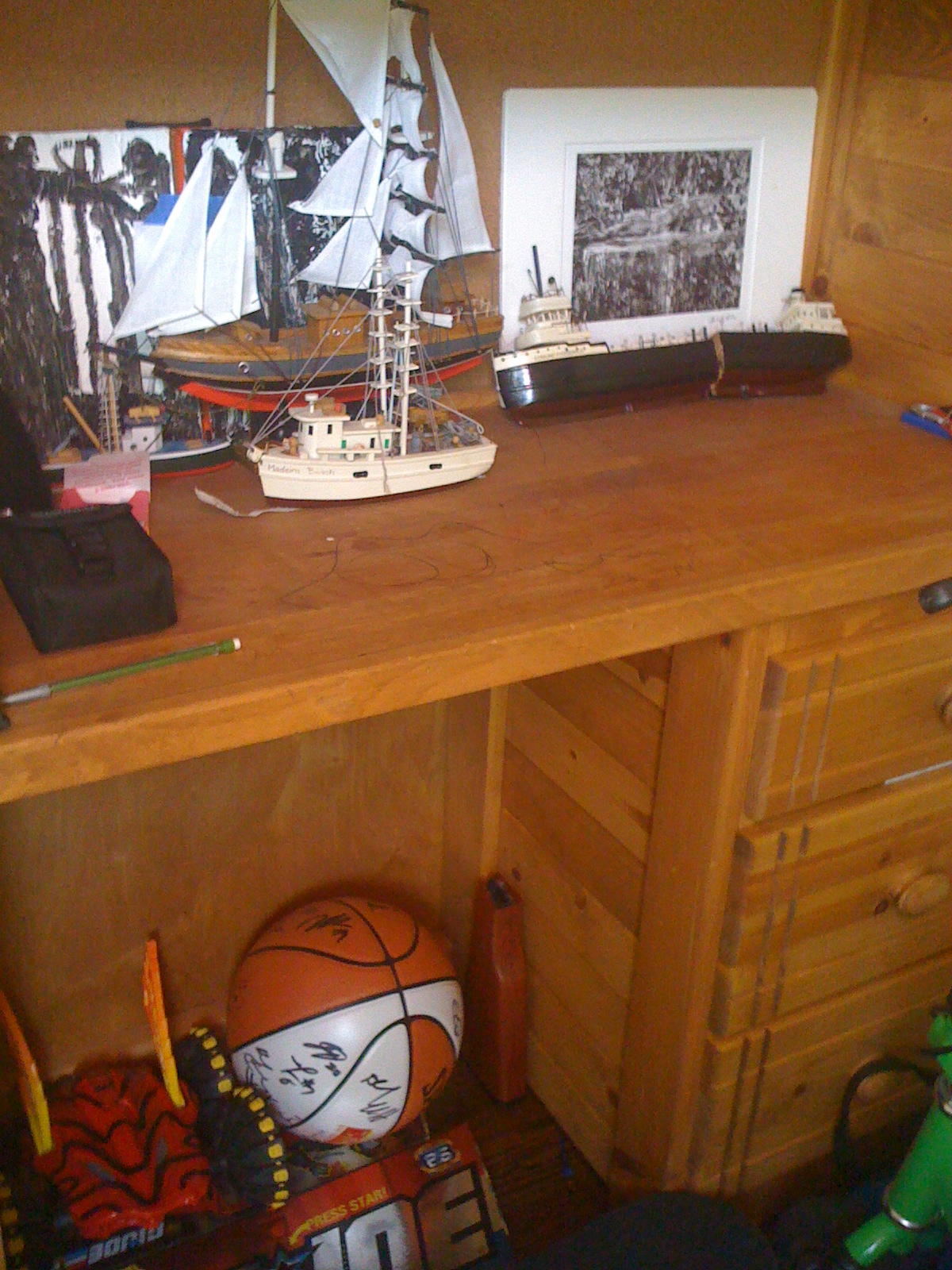
Jake's Desk - After
Gotta love it. The best part is that we haven’t even gotten that deep into the Habits. Up until this point, we’ve only covered Habits 1-4 lightly. However, as the book warns , this process does not happen overnight. In fact, A.B. Combs’ success came about over time. As Stephen Covey tells us,
“A.B. Combs is nearly a decade into the leadership theme, and much of what appears (in these chapters) came about piece by piece, gradually emerging over time.”
It has been interesting, especially, to observe my son over these few weeks. I’m perceiving that he’s feeling a sense of empowerment through the Habits. It seems logical that he would prefer to feel he has the power to choose how to lead (versus being told what to do and why) as well as knowing that we are placing our trust in him to make decisions which are best for him. Either way, he better understands that his actions, regardless, will lead to consequences–positive or negative.
I can see how it would be important to weave the Habits into all that we do so that they simply become a part of us. The children are more inclined to let me speak about the Habits as we are experiencing (in the moment) great ways of using them, as opposed to sitting down and having a “lesson”. The language used by the teachers and students as described in the book suggest how they become second nature to them. They say things like, “(this is) The way we do things around here“; “We dwell in possibilities here“; “You did such a marvelous job with your responsibilities“, etc. When I refer to the Habits and my children give me push back, I simply say, “This is the way we do things around here,” and that’s the end of the conversation. The process is respected. I am also making sure to celebrate their successes.
What’s next? Well, my plans are to continue working in the Habits over time. Because I’ve practiced the Habits myself, I already know that it is important to master the first three, which deal with self-mastery, before moving ahead into the next three, which focus on collaboration. But, mostly, what excites me is the process of unleashing our family’s leadership culture. What A.B. Combs has mastered is to create a unique and deep leadership culture. And, according to The Leader in Me, these are the factors that helped them create this culture:
- Behaviors (i.e., leadership roles, data notebooks, classroom mission statements, etc.)
- Language (i.e., “We focus on the positive”; “We are all leaders”; “We honor the greatness in you”.)
- Artifacts (i.e., murals, posters and artwork expressing the Habits)
- Traditions/Rituals (i.e., Leadership Day, Celebrate Success Hour, service projects, etc.)
- Folklore (stories that have arisen since day 1 of implementation and continue to be shared year after year)
I remember attending a Franklin Covey workshop on the 7 Habits, where everyone in the room represented the business community except for three individuals. When it came time for them to introduce themselves they shared how they were a family (mother and two daughters) who had begun practicing the Habits as a family and recently developed their Family Mission Statement. I was in awe. I remember telling myself,
“Now that is one empowered family! I will do that one day.”
Well, that day has arrived.
If I ask myself what our family culture is, I am not sure I have a clear answer. Using the factors listed above, I plan to move us into the direction of establishing clear examples of how we will bring about this 7 Habits culture in an authentic way; in a way that will make us all proud. After all, wouldn’t it be just as important for families to have a strong, effective culture as it is for companies?
by O ox X
In closing, I’ll share with you A.B. Combs’ Mission and Vision for a bit of inspiration:
MISSION
To Develop Leaders One Child at a Time.
VISION
To Live, to Love, to Learn, to Leave a Legacy.
We Live by striving to be the best we can be.
We Love by caring for others.
We Learn by working hard in the school and always doing our best.
We Leave a Legacy by sharing our school with others and trying to make a difference in the world.
Have a great week,
Monique
My Relaxed Book Club will discuss selections from books I feel help high-achieving professionals continue to develop themselves and work on their personal leadership leading to more fulfilled, balanced and successful lives and careers.
But, I am proactive, Mom!
April 24, 2010

My Lil' Golfer
My review and implementation (at home) of The Leader in Me continues.
He stumped me! Yes, my son, Jacob. During our first 7 Habits discussion at I-Hop (I figured it would be easier over chocolate chip pancakes!), Jacob claimed he was already perfectly proactive. Part of me (the proud Mom) said, “You go, boy! Be proud of all you do!” And another part of me said, “You must be kidding me! Look at your room!!!” So, strategically, I decided I would keep the conversation very positive, focus on what is working well, and get him to Begin with the End in Mind first (Habit 2). I asked him, “What’s one thing you would absolutely love to achieve this year?” He answered, “Mom, I want to win first place in a golf competition.” Great! We have our first goal. My second question (back to Habit 1: Be Proactive) to him was, “What do you feel you need to do to achieve this goal?” He quickly answered, “Practice more.” Bingo.
In The Leader in Me, A.B. Combs uses a few techniques to keep the Habits ever-present for the children. First, all the children have a leadership role (mail carrier, greeter, safety patrol, critter keeper, etc.), and second, they keep a Data Notebook (3-ring binder) to track their goals and successes and share with students, teachers and parents. Although I am not adopting all of the exact strategies used in the book, I am using the same concepts. Both Nia and Jake picked their first Leadership Roles for home. Of course, I have plenty of roles I could assign to them, but that would defeat the purpose. I let them choose their roles, and I am committed to helping them feel successful and track their successes within their chosen roles.
Nia wants to be the leader of her new tortoise, Coney. So, daily, we’ll coach her on what it means to be a leader for her pet. Jake decided he wants to be the leader of his room. Secretly, I think this means he wants to keep his little sister out of his room (LOL!), but we also will coach him around the power around this role. In fact, I had him observe one area of his room (that drives me crazy…see photo below), and I asked him, “What purpose does this area of your room hold for you?” His smart alec answer… “It holds my stuff.” Yeah…that’s obvious! So, I countered that answer by asking, “Okay, how could it better hold your stuff?” He responds, “Mom, this area of my room doesn’t bother me!” Gosh, he stumped me again! But, I didn’t let him win. Once again I focused on Habit 2 (this one seems to work well for Jake) by asking, “What do you think about making this your Golf Goal Space?” His eyes opened wide and he enthusiastically said, “Yes, Mom, I can already see it!” Okay….I pat myself on the back.

Yikes! Help me!
Instead of Data Books, we liked the idea of having a cork board for each of them in their rooms, where they could read the Habits daily, we (parents) could re-direct them to the Habits as necessary, and they also could post a photo reflecting one or more of their goals as if achieved. So, while Jacob wants to win a competition, Nia decided she wanted a dolphin on her board to reminder her of wanting to scuba dive (like father like daughter!). We’ll be working on those boards over the next week as well as getting Jake’s Golf Goal Space off to a good start.
Nia and I also read a beautiful new book, which nicely reflects Habits 1 and 2 as well as the 8th Habit, which is all about finding your voice and inspiring others to find theirs. The book, titled The Curious Garden, is a simple and beautiful story about a little boy who lives in a big, cold city with lots of big buildings. He finds some weeds growing up through an old, long train track, and decides he will help the plants flourish. Soon, the entire track is filled with beautiful gardens. His work later inspired others in the city to grow gardens, changing the energy of the city altogether. When I asked Nia how the boy was proactive, she said to me “Mom, he helped the garden grow and then other people grew gardens too!” I actually couldn’t believe she got it! I guess you CAN teach a 5-year-old how to be proactive! She loves the new word and is beginning to use it often. Bingo. Next week we will tackle Habits 3 and 4… Put First Things First, and Think Win-Win, while continuing to strengthen the first two.
So, Week 1 of infusing the 7 Habits into our world is feeling positive. In The Leader in Me it is clear that one of the reasons A.B. Combs was so successful is because the teaching of the Habits was ubiquitous. They didn’t teach one habit per month (referred to as character education) or just pick a few activities to initiate during the year. No. The Habits are built into EVERYTHING the school does. It has become the foundation for the school’s culture.
In closing, I’ll leave you with a simple song developed by an A.B. Combs kindergarten teacher to help her students remember Habit 1 (to the tune of Twinkle Twinkle, Little Star):
Be Proactive Every Day,
Be Proactive, Stop and Think.
Even Though it’s hard to do,
I think you should try it too.
Be Proactive Every Day,
Be Proactive, Stop and Think.
My Relaxed Book Club will discuss selections from books I feel help high-achieving professionals continue to develop themselves and work on their personal leadership leading to more fulfilled, balanced and successful lives and careers.
No More Mommy Guilt!
April 5, 2010
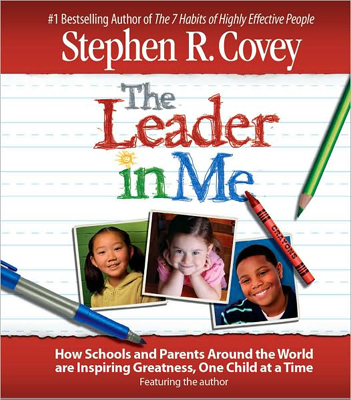
There has been a theme to my life this past month, and although I was enthralled by Seth Godin’s Linchpin, which really makes us think about being indispensable in our work lives, in the back of my mind I couldn’t stop thinking about being indispensable for my children. And, it’s not so much that I want them to see me as something they can’t live without (yes, I’ll take that too!) as much as I want to believe…know in my gut…that I’ve done what is within my power to help them develop as Linchpins themselves.
I was invited in March to attend an event where Stephen Covey was speaking about how the 7 Habits are now being taught to children as young as 5 years old in schools across the U.S.. I was not able to make the engagement, but coincidentally, I received an invitation to a webinar about this new movement and the book that describes it– The Leader in Me. Well, I was positively floored with what I heard and saw. And, happy that so many schools are now making it a priority to teach children how to take personal responsibility for their thoughts, actions, feelings, and see themselves as leaders beginning at a young age. Mostly, though, I became motivated to begin this process at home with my children.
My family and close friends know that I have a sign in my bedroom that reads “No More Mommy Guilt!” Mommies out there…you know what I mean! I’ve been able to wipe away the good majority of this guilt from my life, but it does creep in during stressful times. So I decided to take action after I received this email that sounded too close to home this month:
From Raising Small Souls:
If a recording were to be made of the interaction between a parent and her child on a typical day, studies show that it would sound something like this:“Take your shoes off the couch.”
“Get your shoes on already.”
“Hurry up!”
“Don’t yell.”
“We’re late, hurry!”
“Food belongs in the kitchen.”
“Oh! Look at the mess you made!”
“What do you mean, you can’t find your shoes?”
“Did you brush your teeth?”
“Where was the other shoe?”
“Finish up, we’ve gotta go!”
“I SAID DON’T YELL!”
etc.
How do we stop this tape from continuously running in our homes? I now have a thesis I hope to prove that implementing the 7 Habits at home will dramatically help us all to shift out of this type of one-way chatter and into a self-led proactive communication and action model. Cross your fingers (along with me!). I’m going for it.
So, for you Mommies (and Daddies!) who want to join me in implementing the 7 Habits at home, this is my Relaxed Book Club topic of the month (maybe not so relaxed this time!).
You can find The Leader in Me in book stores, and you can download the Parent’s Guide for less than $5.
Here’s to creating the most adorable bunch of Linchpins at home!
I hope you will become inspired as well and join me!
In the spirit of leadership,
Monique… the “no more mommy guilt” Mommy!
My Relaxed Book Club will discuss selections from books I feel help high-achieving professionals continue to develop themselves and work on their personal leadership leading to more fulfilled, balanced and successful lives and careers.
Shippin’ off to Success
March 21, 2010
 In Linchpin, Godin refers to “Ship” or “Shipping” as the action we take when we embrace our art energetically and “sprint,” or focus all of our effort on the art until we achieve our intended goal.
How do we know when it’s time to ship? First, we need to ensure that we’ve silenced the resistance (or lizard brain) and selected the right art to ship. Let’s stop here. Are you asking yourself, “What do you mean the ‘right art’? We have more than one?” Absolutely. Take Godin’s example, here:
“Van Gogh wasn’t wired to paint. Paint was the medium available to him at the time. If he had lived today, perhaps he would have marketed organic tofu. It’s not predetermined that you’ll hold a paintbrush or write a symphony. That means you have to choose your art. It’s not preordained; there isn’t only one art for you…If you pick something that’s beneath you, then the resistance will win. Trivial art isn’t worth the trouble it takes to produce it…If it’s not, dream bigger.”
Remember that our lizard brain wants to distract us. It wants us to be workaholics who fill our hours with meaningless, busy work. When the lizard brain is at hand we choose bad ideas or trivial art, and either our feelings of anxiety or insignificance get the best of us.
Godin uses his own personal examples to show us how to SHIP. He shares,
“Am I some sort of prodigy? I don’t think so. I ship. I don’t get in the way of the muse, I fight the resistance, and I ship. I do this by not doing an enormous number of tasks that are perfect stalling devices, ideal ways of introducing the resistance into our lives.”
Here’s an easy-to-follow synopsis of his process for Shipping with a solid platform (with a nautical theme for fun!):
1. Choose your Destination (or art: project, idea, event, etc.). Make sure it is not trivial, but energizes you, inspires you, and brings out the artist in you.
a. Can’t find that inspiration? Give yourself 30 minutes to come up with 10 ideas! This type of brainstorming session quiets the lizard and enables us to sprint for a short period and connect with inspiration. I tried this yesterday. I focused on one topic—coaching, and within 10 SECONDS I came up with a great idea that I plan to put through this process.
2. Select your Ship Date and post it up on a wall where you see it daily. This is your non-negotiable launch date.
3. Go Fish. Fishing will definitely be a part of your journey. Use your preferred method to capture all of your ideas (index cards, journal, word doc, etc.)
4. Create Motion in the Ocean. Review what you’ve captured, and capture more (when you think you’ve brainstormed enough…do more of it!)
5. Map your Trip. What are the coordinates that will get you to your destination? This is when you take what you’ve captured and create your map (timeline, resources, business plan, etc.).
6. Round up your Crew. A ship does not endure with just its captain. It needs a solid crew. Gather those who can approve, cancel, suggest, own (investors) and who care about your Destination. Review your map with them. Make any changes to your plans based on their feedback.
7. Ship. Here’s the key, though. Only ship when you get the “YES” from your crew. Are they in or out? They are your platform and you need them in order to reach your destination.
So now that you’ve shipped, how do ensure you succeed? Godin offers the regimen of Leo Babauta, author of Zen Habits, which looks like this:
1. Attempt only one significant work a year.
2. Break it into smaller projects.
3. Find three tasks to accomplish each day that get you closer to completion.
4. Do these in less than one hour each day (focused work, or “sprinting”).
Today, take some time to ponder what your days are filled with. Are you being an artist today (or tomorrow, or the next day)? If your days happened to be filled with meaningless “cog” work, and you find yourself just “looking busy,” consider shaking things up. The lizard is definitely at play and is happy you are not tapping into your inner artist.
Do yourself a favor. Locate your destination. Chart your course. Be your own captain. Do it today.
Namaste,
Monique
My Relaxed Book Club will discuss selections from books I feel help high-achieving professionals continue to develop themselves and work on their personal leadership leading to more fulfilled, balanced and successful lives and careers.
Are you there, God? It’s me, Sybil.
March 14, 2010
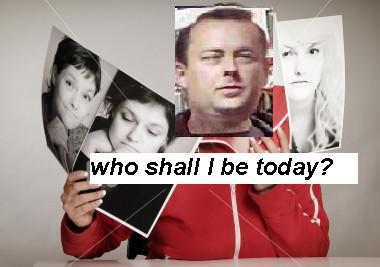 As a child I remember watching the movie, Sybil. My heart hurt for her and everything she endured because of her illness. While watching, I remember wondering, “Who is the real Sybil.” I wanted her to experience that desperately as well.
You and I may not be Sybil and experience multiple personalities, but don’t you sometimes feel like there is more than one of you? Don’t you catch yourself looking up to the sky sometimes and asking for help? You may find yourself saying, “Who the hell am I?” “Why does one voice tell me go and the other stop?” “Why am I happy today and pissed tomorrow?” Yes…we’ve all been there.
Well, if you read my last blog about Linchpin: Are You Indispensable?, you know that you kinda do have two of you in there somewhere. In fact, according to Godin,
“There are two almond-shaped bits in everyone’s brain. Scientists call these amygdale, and this mini-brain apparently takes over whenever you are angry, afraid, aroused, hungry, or in search of revenge. It’s only recently that our brains evolved to allow big thoughts, generosity, speech, consciousness, and yes, art…The new part is the neocortex…In the face of screaming resistance from the amygdale, the rest of the brain is helpless. It freezes and surrenders. The lizard takes over and tries to protect itself…So the two parts duke it out. And, when put on alert, the lizard brain wins, every time, unless you’ve established new habits and better patterns—patterns that keep the lizard at bay.”
See, you’re not crazy! You can take a deep breath now. But, you may be asking, how do we go from “we” to “I”? “How do I quiet that lizard voice in my head?”
Well, I’m about half-way through the book and Godin is already sharing a few tips for getting back more of your power; your true voice. He alluded to it above by suggesting we must create “new habits and better patterns.” Here are four tough ones to create. Get ready to work hard!:
• Seek out discomfort. In fact, we must go out of our way to be uncomfortable. (Are you beginning to sweat already?) Godin says: “Ironically, it’s those who seek out discomfort that are able to make a difference and find their footing.”
• Forget Plan B. Remember that safe, plan b we’ve always created? Come on, you know what I’m talking about! Godin believes: “You’ve probably guessed what happens when you have a great backup plan: You end up settling for the backup. As soon as you say, ‘I’ll try my best,’ instead of ‘I will,’ you’ve opened the door for the lizard.”
• Look for the bad ideas. Seriously? “Yes,” says Godin. “Finding good ideas is surprisingly easy once you deal with the problem of finding the bad ideas. Every creative person I know generates a slew of laughable ideas for every good one.”
• Listen and do it anyway. Listen to the lizard (it will always talk to you!), and do it anyway! Read that book, push forward with that new idea, say what’s on your mind, etc. Godin shares, “The lizard hates it when you read books like this one.”
When what you are doing is isn’t working, do things differently, right? Let’s give it a shot, folks. Simply thinking of attempting to do the four steps listed above stirs up quite a bit of “uncomfortable(ness)” for me. I’m sure the same is true for you, because our “Sybil” (lizard brain) is at play. Feel the fear? I think, then, that working on step 1 is key—feeling uncomfortable. I’m up for it, are you?
Let me close by discussing confidence as Godin does as well. It takes confidence to even attempt to be successful at creating the above new habits. So, how do you build confidence? A little bit at a time. And, as you achieve small successes, you’ll begin to bring increased confidence with you to your new habits and actions, raising your feelings of success.
Finally, you can increase your confidence by “pumping yourself up”. There are so many ways to do this, but one I find truly enjoyable is reading The Optimists Creed. Here is an enjoyable version.
Tell that lizard that your eternal optimist is alive, kicking, and ready for a tough match!
Have an inspired week!
Monique
My Relaxed Book Club will discuss selections from books I feel help high-achieving professionals continue to develop themselves and work on their personal leadership leading to more fulfilled, balanced and successful lives and careers.
“Resist Your Genius,” Says the Lizard Brain
March 5, 2010
“At the age of four, you were an artist. And at seven, you were a poet. And by the time you were twelve, if you had a lemonade stand, you were an entrepreneur. Of course you can do something that matters. I guess I’m wondering if you want to.” –Seth Godin
I can’t seem to put down this book. It is intriguing and activating. It shows us why the organizational model of the past no longer works and why we must decide to be Linchpins in order to connect with our inner genius and artist (yes, our inner child) and become indispensable, despite the economic woes we are experiencing. However, as Godin clearly asks above, “Do you want to be indispensable?” It is not that you can’t—we all can. But, it is clearly a choice.

So what about this outdated organizational model? Why doesn’t it work?
According to Godin: “The system we grew up with is based on a simple formula: Do your job. Show up. Work hard. Listen to the boss. Stick it out. Be part of the system. You’ll be rewarded.” Sound familiar? The new system is different. It is one that creates leaders who live without a map. The new system “Requires a different attitude. It requires you to be a linchpin. Linchpins are the essential building blocks of tomorrow’s high-value organizations.”
But, again, it is clear that becoming a Linchpin is a choice. You must decide that you want to go against the grain and embrace (or find) your inner voice, your genius, your desire to be an ARTIST, to be REMARKABLE, and to be generous with your ideas and your self. Linchpins don’t have job titles or descriptions; they do what is necessary to get the desired results; they look for a true win-win… always. Linchpins “Leverage something internal, not external, to create a position of power and value.”
Are you ready to make that internal SHIFT to become indispensable?
If you answered “yes”, then you must shut off your lizard brain! Godin explains that our internal resistance (or lizard brain) prevents us from developing those skills which make us indispensable.
“The lizard brain is hungry, scared, angry, and horny. The lizard brain will fight (to the death) if it has to, but would rather run away. It likes a vendetta and has no trouble getting angry. The lizard brain cares what everyone else thinks, because status in the tribe is essential to its survival. A squirrel runs around looking for nuts, hiding from foxes, listening for predators, and watching for other squirrels. The squirrel does this because that’s all it can do. All the squirrel has a lizard brain.”
To some extent, our lizard brain has been developed by the “old system,” which, again, told us that we must find any job, shut up and smile, don’t do anything other than what you are paid to do, fight for your life, and forget the artist inside! The lizard brain is a learned behavior we need to break to become a Linchpin.
So while I was reading Linchpin I couldn’t help but find a correlation to one of the episodes of Spongebob Squarepants (that’s right!). My children love Spongebob and I have no choice but to sit with them and become engrossed in it. So, in this particular scene, the one-inch (with a powerful voice) Plankton takes over Spongebob’s brain and is forcing him to walk against his will (akin to a Factory manager treating his employees like machines) to the Krusty Krab to grab a Krabby Patty so Plankton can ID the Patty’s secret recipe.

But, Spongebob, who is the very best at what he does (Krabby Patty fry cook) and is Mr. Krab’s most dedicated employee, refuses to be controlled and entices Plankton out of his brain with the simply irresistible description and smell of the Krabby Patty.
Plankton (the weak old system) will never win. Spongebob’s love for his work, for his ART (the Krabby Patty) always will win.
Keep watching episodes of Spongebob and you’ll find that he has made himself indispensable. He doesn’t believe in mediocrity, is committed to his purpose and passion, and in Bikini Bottom (where he lives), Spongebob is a Linchpin. In his particular role he is REMARKABLE. He is talked about and his product is wanted. He’s not just a fry cook, he is an artist.
What would make you impossibly good at your job?
So let’s make this relevant right now. Answer the question above and decide to take one step this week to shrink our lizard brain tendencies and increase our linchpin attributes. Take action to tap our inner genius and show the world more of who we truly are.
Adios lizard brain…hello inner child….hello Artist!
You know, I think I may change my job title to ARTIST! The lizard brains may resist….but we know why.
Have a genius week,
Monique
My Relaxed Book Club will discuss selections from books I feel help high-achieving professionals continue to develop themselves and work on their personal leadership leading to more fulfilled, balanced and successful lives and careers.
Blog Challenge! #best09
December 11, 2009

Check this out! What a great way to appreciate what precious and simple gifts 2009 has brought us all. As a happy blogger I’m deciding to participate with many others in this challenge, share in others’ great ’09 moments, and hopefully, get some great tips along the way.
The idea is to micro blog about the topic of the day (25 topics in December). I’m not starting on time, and so I’m just choosing to pick and choose some memorable topics and moments which apply to me and that I wish to share. So, you’ll hear from me a bit this December! Hope you don’t mind. 🙂
I particularly like a few of the topics I’ve missed, so I will begin with them in order to catch up. And away we go!
Dec. 1 – Trip – My best trip this year was to Chicago with my Junior High School girlfriends (Las Sucias….Lina, Kiki, Ody, Anne, Rosie and Audra). We have been taking trips each year for nine years. This was my first time in Chicago, and I absolutely fell in love with the city and the people. My favorite moment was taking the SPEED Architectural Tour and getting super soaked. You know when you laugh so hard you think you’re going to pee??? It was one of those moments. Nice. Thanks for a wonderful time, Chicago! But, mostly, I can be anywhere with my “girls” and be perfectly content. I love you, Ladies!! XXXOOO

Out and About in CHI!
Dec. 4 – Book – Hands down, the best book I’ve read this year is Energy Leadership by Bruce D Schneider. Yes, Bruce, I’m giving you a plug!! I love Bruce, iPEC (Institute for Professional Excellence in Coaching), and I can honestly say that reading this book solidified my desire to become a Professional Leadership Coach, specializing in the study of energy. This book showed me exactly how a company could be turned around using the Energy Leadership Index and Energy Leadership Coaching. Very exciting stuff that gets me going!!
Dec. 5 – Night Out – OMG! I was reborn the night I was invited to attend a friend’s party at a hole in the wall bar just a few blocks away from my house (good thing for those very late nights!). I am a natural-born performer (former dancer and kick but karaoke singer!), so when I saw the encyclopedia-sized Karaoke book in the 7 Seas Bar, I about lost it. I had a blast belting out my favorite tunes with my friends, letting loose, and hanging out with the most random people I’ve ever met. Fun night. Now… a monthly tradition.
Dec. 6 – Workshop or Conference – Absolutely my iPEC coaching program weekend trainings in Tampa, FL with my fellow coaches. You all ROCK! Much love, always.
Dec. 8 – Moment of Peace – Ok…don’t laugh…but, sometimes, the only place I can be still and meditate in the dark for 10 or so minutes is my bathroom! Sad, but true. Every morning after my shower, this is my “get my morning off on the right foot” ritual. Regardless of the location, it shall continue for my sanity!
Dec. 9 – Challenge – Something that really made me grow this year was taking a huge leap of faith, together with my husband, and launching our new venture http://scubanation.com. Yes, the unknown can be risky and scary, but also can be down right exciting! Pursue your passion and success shall follow.

Celebrating at the ScubaNation.com Launch Party
Whew! I think I’m caught up now. I can’t promise I will blog each day this month, but I will be back soon to continue my #best09!
Enjoy and celebrate the best of your year!
Monique
Got solution? No problem!
August 1, 2009
I’ve always been a big fan of strengths-based leadership and personal development. It just makes sense to me. I was speaking with a student last week who was challenged with finding what it took within her to buckle down and study for a math exam she absolutely needed to ace, despite her lack-luster interest in math. Sound familiar? Well, it did to me. I resonated with her story. Although I was very good at math and enjoyed the challenge during a particular time in my life (10th & 11th grade) when I was very focused and desired to be a “great” student, I understood deeply that it just wasn’t “my thing”. My strengths were always in the areas of communication and expression, whether it be dancing, singing, broadcasting, writing, etc. Yet, while it may always be worth our while to place most of our energy into our areas of strengths, sometimes we do have work in and around these challenging areas. We need to do just enough to get through or by them. And, interestingly enough, many times our strengths are what we need to rely on to help us pull through our weaknesses.
This week when I received one of my daily kabbalah tune up messages, I was reminded of how looking at solutions vs. problems can be similarly challenging. Here’s what the tune up said:
“The solution exists before the problem. This is a kabbalistic truth that saves a lot of worrying. So often in life we freak out because we don’t think there is an answer, a cure, a way out. We needn’t worry. It’s there. We just need to find it….answers come from unexpected places….the more you feel this truth, the faster it will come.”
Then, it dawned on me…this is the type of mentality we must also have when it comes to manifestation, or the expectation of creating miracles in our lives. If we don’t look for those miracles to show, they just won’t! It takes practice to think in this manner and to expect the universe to send us what we need or desire. The same should be true for seeing solutions rather than problems. So, if it takes practice to have this become a learned behavior and see results, why not practice it! That’s what I’ve decide to do “religiously” for one week. Maybe you can join me on my one week challenge to be completely and forcibly solutions focused?? Let’s have some fun!
My Plan.
- Expect the unexpected. I shall write this on my mirror and in my office so that I see it throughout the day.
- Play detective. If solutions exist before problems, then I must search for them like a detective! (I’m having fun already!)
- Play catch. I must pay keen attention to these so called “problems” that I and others around me encounter. I will catch myself and them in the act!
- Keep track. I will keep a journal and jot down immediately the identified challenge and the solution that I have found.
- Start a revolution! I will share my results with you and others (see below) and launch a wave of solution thinking!
Let’s begin!
Here’s what I found…
Interestingly enough, the week began with what most would consider a major problem…my husband parting ways with his job and his career of 15+ years with no foreseeable income in sight. Overnight I have become the sole bread earner for our family. Pressure? Not really! This so-called challenge is providing me with the best of the best opportunities to practice what I preach—to think thoughts of abundance and gratitude and TRUST that our family will be taken care of and that we will receive all that we need exactly when we need it. I am frighteningly calm.
The second part of this first, very real challenge is that my husband now has the chance to fulfill a life-long passion of his, which is to pursue a career in the scuba diving industry. He is jumping into the abyss of entrepreneurship and without an iota of “lack” in his mind or vocabulary he is leaping in with tremendous joy and passion. I love to see people take risks; to pursue and live their dreams. My support he must have. This is the solution that I found.
My detective work continued thoroughly throughout the week and my journal filled with problems and solutions. Things that disrupted my days and my pre-planning, things that made my ego rage and incidents for me and those around me that provided instant occasions for learning. By Thursday I had absolutely no interest in being this detective any longer. Why? When I read through my list of so-called problems I realized how these things we call problems are simply distractions…things that take us away from our intended plans and cause frustration if we allow them to. They no longer were problems for me and I was happy with that realization.
The most important lesson I have learned this week is that we truly cannot sweat the small stuff. Yes, life will throw us some really big and difficult problems, but if we truly choose to believe that the universe only sends us problems because the solution was created first, then we have no problems, yes? I love this thought and I choose to believe and live this thought. I am at peace.
Speaking of peace…I feel the powers at hand sent me a nice gift this past week; a gentle reminder that life is about balance and trust…about ying and yang. As I was brushing my teeth and staring at my beautifully tiled bathroom I noticed what looked to be a ying/yang sign naturally created in my stone. I couldn’t help but giggle. Here is a photo of it.

I expected the unexpected, and that is what I received.
I choose to be at peace and to trust that we will be taken care of.
Only solutions exist.
May you have a month filled with peace, light and blessings,
Monique


 Illumined Life Leadership